

The ancient dust of the Iberian Peninsula has a way of settling into the soul long before it ever touches your boots. For decades, the Camino de Santiago was seen as the ultimate test of endurance – a slow-motion trek through Spanish history that required little more than a heavy pack and a stout heart. However, as we navigate the mid-2020s, a new phenomenon has taken hold of the trail. The "Gen-P" trend, or Generation Pilgrimage, represents a fundamental shift in how we approach these historic corridors. No longer just a religious rite or a rugged hiking trip, the pilgrimage has evolved into a sophisticated blend of digital detox, intentional movement, and "hushpitality" – the pursuit of silence and mental restoration in an overstimulated world.
This modern pilgrim is a different breed. They are tech-savvy but seek disconnection; they are efficient but crave slow experiences. To "hack" a pilgrimage in today's travel climate is to master the art of the invisible journey. It's about reaching the starting line in Saint-Jean-Pied-de-Port or Porto without the exhaustion that typically accompanies long-haul air travel. It's about understanding that the pilgrimage begins at the airport terminal, not at the first yellow arrow. If you are preparing to join the half-million souls trekking toward Santiago de Compostela, your strategy for getting there must be as deliberate as the walk itself.
So, how can you master the modern pilgrimage without losing your mind (or your gear) at 30,000 feet?
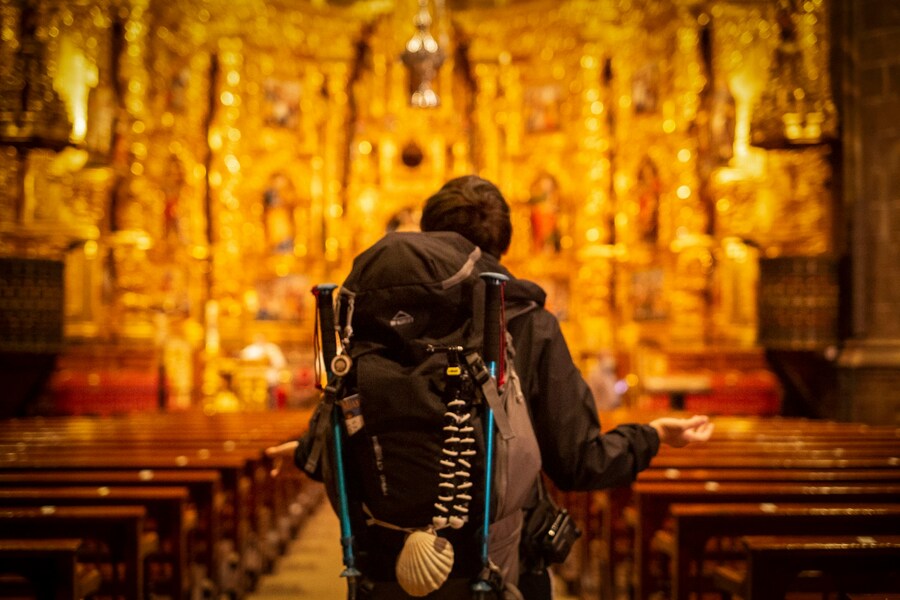 Source: Peter Amende/Unsplash
The logistics of reaching the Camino have grown increasingly complex as global travel adapts to new digital borders and stricter airline regulations. The secret to a successful Gen-P journey lies in the "zero-entry" philosophy: minimizing the friction between your front door and the trailhead. This requires a radical rethink of packing, flying, and even how you manage your transition from the clouds to the cobblestones. By applying specific air travel hacks tailored for the long-distance walker, you can ensure that your physical and mental energy is preserved for the miles that actually matter.
The art of the hybrid carry-on strategy
One of the greatest stressors for any pilgrim is the fear of lost luggage. On the Camino, your backpack is your home. If an airline loses your bag, they aren't just losing your clothes; they are losing your carefully broken-in boots, your custom-fitted sleep system, and your sense of security. The Gen-P hack for this is the "Hybrid Carry-On" method. Most modern hiking packs designed for the Camino are roughly 30 to 40 liters. While these often fit within overhead bin dimensions, their frames and straps can be a liability.
Instead of checking your pack as is, use a lightweight, packable duffle bag. Place your loaded backpack inside the duffle and carry it on. This protects the delicate buckles and straps from being snagged in the plane's overhead machinery and disguises the "backpacker" look that sometimes draws extra scrutiny from gate agents. If you are forced to gate-check the bag, the duffle acts as a sacrificial layer of protection. Crucially, always wear your hiking boots on the plane. They are the heaviest item in your kit and the most impossible to replace if lost. Everything else can be bought at a Spanish Decathlon, but a new pair of boots on day one is a recipe for a medical evacuation.
Navigating the "Digital Iron Curtain" and security hacks
As we move through 2026, the European travel landscape has become more digitized. New entry-exit systems and mandatory travel authorizations mean that the "spontaneous" pilgrim must now be a master of pre-travel bureaucracy. Beyond the paperwork, the physical security screening remains a hurdle for those carrying specialized gear. Trekking poles are the primary point of contention. Most airlines and security agencies still classify them as potential weapons, meaning they cannot be carried in the cabin.
Rather than paying for a full checked bag just for poles, many seasoned pilgrims use the "Mailing Tube Hack." Purchase a sturdy cardboard mailing tube, place your poles (and other prohibited items like pocket knives or liquids over 100ml) inside, and check only the tube. This is significantly cheaper than a full suitcase and allows you to keep your main backpack with you in the cabin. Alternatively, the Gen-P trend has leaned toward "local sourcing" – buying inexpensive poles in Madrid or Saint-Jean-Pied-de-Port and donating them to a fellow pilgrim at the end of the journey. This aligns with the "Circular Camino" ethos, reducing your carbon footprint and saving you the headache of specialized luggage.
The physiology of the pre-walk flight
A pilgrimage is a physical demand on the body that most modern lifestyles don't prepare us for. Flying across time zones often introduces systemic inflammation and dehydration, which are the silent enemies of a long-distance walker. To hack your flight, you must treat the cabin like a pre-season training camp. The Gen-P approach prioritizes "Biological Synchronization." This means immediately switching your watch to Spanish time the moment you board and using high-quality compression socks not just for the flight, but for the first three days of the walk to prevent "Golfer's Rash" or vasculitis.
Modern "hushpitality" hacks include using bone-conduction headphones during the flight. These allow you to listen to calming biophilic sounds – like the wind in the Galician eucalyptus trees – while remaining aware of your surroundings. Avoiding cabin alcohol is non-negotiable for the pilgrim. The goal is to arrive at your starting point with your cellular hydration at its peak, as the first 25 kilometers over the Napoleon Pass are unforgiving to a hungover or dehydrated system.
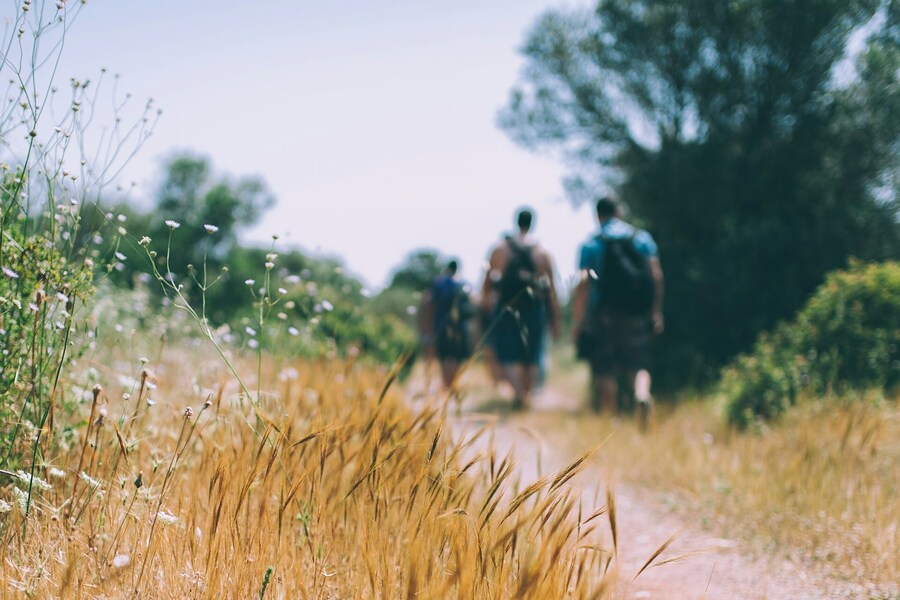
Source: Angelo Pantazis/Unsplash
Ground logistics and strategic staging
Once you land in Europe, the transition to the trail is where many journeys falter. The Gen-P trend emphasizes "Slow Staging." Instead of rushing from the airport to the train station to the trail on the same day, successful hackers build in a 24-hour buffer in a "gateway city" like Pamplona or Leon. This allows your internal clock to reset and provides a window to solve the inevitable "lost item" crisis.
During this transition, managing your belongings becomes a game of logistics. If you are flying into a major hub before heading to the coast or the mountains, consider your parking and transit options carefully. For those traveling from the United States, your departure point is just as important as your destination. For instance, if you are flying out of a major Florida hub, you'll find that securing a spot via MCO Airport parking can save you significant stress and funds that are better spent on a private room in a Galician pazo. Using dedicated services for MCO parking deals ensures that your vehicle is secure while you are wandering through the Pyrenees, allowing you to fully commit to the digital detox without worrying about the logistics back home.
The minimalist gear manifesto for the new era
The most significant "hack" for the Camino in 2026 is simply taking less. The Gen-P movement has rejected the "just in case" mentality that plagued earlier generations of hikers. Every ounce you carry is a tax on your knees. A modern packing list should follow the rule of threes: three pairs of socks, three sets of underwear, and two shirts. The rise of high-performance Merino wool and self-cleaning fabrics means you can go longer between washes without the dreaded "pilgrim funk."
Modern pilgrims are also embracing "Multi-Use Minimalism." Your silk sleeping bag liner is also your emergency wrap; your buff is a sweatband, a hat, and a makeshift mask for dusty stretches of the Meseta. By keeping your total pack weight under 10% of your body weight, you bypass the need for luggage transfer services, which have become increasingly expensive and environmentally questioned. Carrying your own weight is the ultimate pilgrimage hack – it keeps you honest, mobile, and untethered from the logistical grid.
Technological tools for the intentional wanderer
While the goal is often to disconnect, the right technology can actually facilitate a deeper pilgrimage experience. The 2026 pilgrim uses "Low-Stimulus Tech." This includes apps that function offline, providing topographical maps and albergue availability without requiring a constant data connection. Satellite messengers have replaced the need for international roaming plans for many, offering a way to send a "check-in" to family once a day while keeping the phone in airplane mode for the remaining 23 hours.
Another hack is the "Digital Credential." While the paper credencial remains a sacred souvenir, many sections of the Camino now accept digital stamps via QR codes. This ensures you have a backup of your progress if your paper book gets soaked in a sudden Galician downpour. However, the true Gen-P pro knows that the best technology on the trail is no technology at all. They use their phone as a tool, not a tether, keeping it buried deep in their pack to ensure the sights and sounds of the path are filtered through their own eyes, not a glass screen.
The bottom line
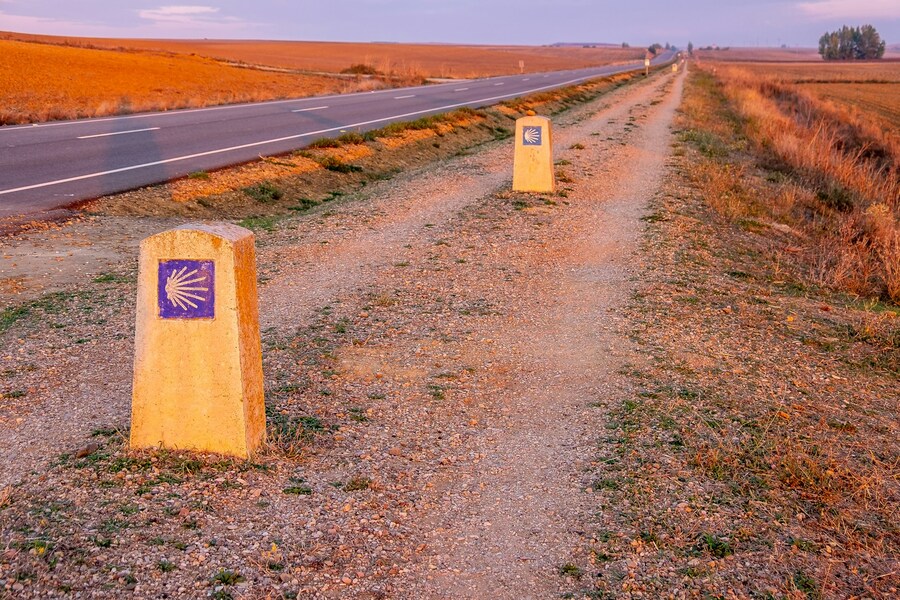 Source: Burkard Meyendriesch/Unsplash
Ultimately, hacking the Camino de Santiago isn't about finding shortcuts or avoiding the hard work of the walk. Instead, it's about removing the artificial barriers that modern travel places between us and the experience of pilgrimage. Whether it's by protecting your boots in a hybrid carry-on, securing your vehicle through reliable airport parking before you depart, or mastering the art of the minimalist kit, every hack serves a single purpose: to clear the path.
The Gen-P trend reminds us that the journey is the destination, and that journey starts the moment you begin to pack. By arriving at the trailhead rested, hydrated, and unburdened by unnecessary gear, you open yourself up to the transformative power of the trail. The Camino has been there for over a millennium, and while the tools we use to reach it have changed, the fundamental truth of the walk remains the same. It's a slow, rhythmic return to the self – one that's best experienced when you've hacked away the noise of the world to hear the sound of your own footsteps.


