

The modern landscape of air travel has shifted dramatically from the days of simple, distance-based charts to a complex web of dynamic pricing and opaque algorithms. For the casual traveler, searching for a flight using miles often feels like a losing game, with "saver" seats disappearing in seconds and prices fluctuating wildly based on demand. However, beneath this surface of frustration lies a sophisticated ecosystem used by expert frequent flyers to unlock incredible value. These "sweet spots" are the holy grail of award travel – redemptions where the number of miles required is disproportionately low compared to the cash price of the ticket.
To find these hidden gems, one must move beyond the basic search bars of major airline websites. The secret lies in understanding the relationships between global airline alliances and the "hidden" award charts that many programs still maintain for their partners. While an airline might use dynamic pricing for its own flights, it often adheres to a fixed, distance-based, or zone-based chart when you book a flight on a partner airline. This creates arbitrage opportunities that can save you tens of thousands of miles on a single trip.
So, how can you uncover hidden award sweet spots and avoid dynamic pricing traps?
 Source: Chris Leipelt/Unsplash
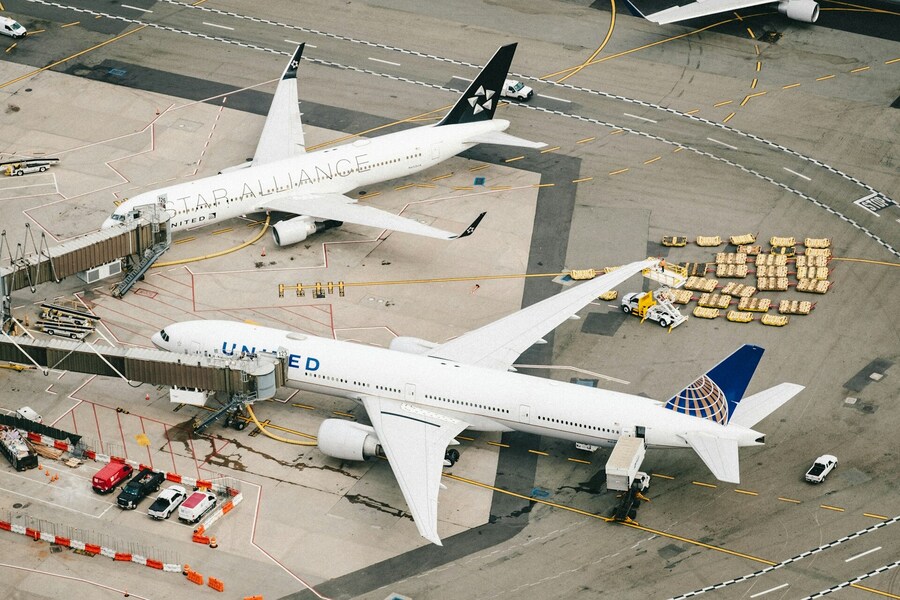
The first step in mastering these hidden redemptions is recognizing that the airline you fly doesn't have to be the airline where you earn or spend your miles. Most major carriers belong to one of three global alliances:
Leveraging the power of partner arbitrage
One of the most legendary examples of this involves booking domestic flights within North America. If you search for a flight from the West Coast to Hawaii on a major U.S. carrier's website, you might see prices ranging from 40,000 to 90,000 miles for a round-trip economy ticket during peak season. However, because that carrier is a partner with several international airlines, you can often find the exact same seat for a fraction of the cost by using a foreign partner's loyalty program.
Some international programs use a "distance-based" award chart, meaning they charge based on the number of miles flown rather than the destination's popularity. For a flight that's just under a certain mileage threshold, the price might be as low as 7,500 to 12,500 miles one-way. This is a classic "hidden" redemption because the domestic airline will never show you this lower price on its own website; you must go to the partner's site or call their service center to book it.
Navigating distance-based vs. zone-based charts
Understanding the difference between distance-based and zone-based charts is critical for identifying sweet spots. A zone-based program (like many U.S. programs used to be) charges a flat rate between two regions – for example, North America to "Europe 1." A distance-based program, however, calculates the cost based on the total physical distance of the journey.
The trick is to find routes that sit at the very top of a distance bracket or involve "short-haul" international hops. For instance, a flight from New York to London is significantly shorter than a flight from Los Angeles to London. In a zone-based system, both might cost the same. In a distance-based system, the New York flight might fall into a much cheaper category. Smart travelers look for "gateway" cities that allow them to jump across an ocean or a border just under a specific mileage cutoff, effectively "hacking" the chart to get a lower rate.
Fifth Freedom routes: the secret to luxury for less
Another elite strategy involves "Fifth Freedom" routes. These occur when an airline flies between two countries, neither of which is its home base. For example, a Middle Eastern carrier might fly from New York to Athens before continuing to its hub. Because the airline is competing on a route where it isn't the primary carrier, it often releases more award space or prices these segments more aggressively.
These routes are often omitted from standard search results because travelers typically search for domestic carriers or the national airline of their destination. By specifically searching for these "hidden" segments, you can often find world-class business-class seats for the price of a standard economy ticket. These flights are frequently the most reliable way to find premium cabin availability when "standard" searches show nothing but waitlists or exorbitant prices.
Advanced search tools and the "ghost" availability factor

In the current era, the sheer volume of data makes manual searching difficult. Expert travelers now rely on specialized aggregators and search tools that "scrape" multiple airline partner sites simultaneously. These tools are designed to surface the "saver" level inventory that airlines try to hide. They can show you, for instance, that while a flight isn't available for 30,000 miles on the airline's own site, it's available for 15,000 miles through a specific partner program.
However, a word of caution: "ghost availability" is a common pitfall. This happens when a partner website shows a seat as available, but when you attempt to book, the transaction fails because the operating airline hasn't actually released the seat. To avoid this, always cross-reference the availability on at least two different partner websites within the same alliance before transferring any flexible credit card points. If you see the seat on both an Asian carrier's site and a European carrier's site for the same flight, it's almost certainly real.
Positioning flights: the "gateway" strategy
Sometimes the "sweet spot" isn't available from your home airport. This is where the concept of a "positioning flight" comes into play. If you live in a mid-sized city, award prices might be high because there's little competition. However, a major hub just a short flight away might have a massive "sweet spot" redemption to Europe or Asia.
Instead of booking a single ticket from your home to your final destination, you book a cheap cash ticket (or a very low-cost award ticket) to the major hub, and then use your "hidden" redemption for the long-haul portion of the trip. This requires a bit more logistics – such as ensuring you have enough time between flights to account for delays – but it can save you 50% or more of your total mileage stash.
The role of flexible point currencies
The most effective way to take advantage of these charts is by earning "transferable" points rather than miles with a single airline. Programs offered by major credit cards allow you to move your points to dozens of different airline partners. This gives you the ultimate flexibility: if one airline devalues its award chart or hides its sweet spots, you can simply move your points to a different partner that still offers the "hidden" value you're looking for.
This strategy is particularly effective for family travel. Finding four business-class seats on a single flight is notoriously difficult. However, by looking at "niche" partners that others overlook, you can often find blocks of seats that haven't been snatched up by the general public. These programs often have older, clunkier websites that discourage the average user, leaving more inventory for those willing to do a little extra digging.
Maximizing value at the start of your journey
While finding the perfect flight is the primary goal, a truly seamless travel experience begins long before you reach the gate. Experienced travelers know that the "hassle" of travel can be mitigated by optimizing the very first leg of the journey: getting to the airport. For those flying out of major hubs like Philadelphia, managing the logistics of your vehicle can be a significant part of the travel budget and stress level.
Finding reliable PHL Airport parking is a "travel hack" in its own right. Just as you wouldn't pay full price for a business-class seat if a sweet spot redemption were available, you shouldn't pay premium drive-up rates at the terminal. By utilizing specialized booking platforms, you can secure PHL parking deals that offer secure, convenient spots at a fraction of the daily rate. This ensures that the money you saved by finding a hidden award redemption isn't immediately spent on expensive terminal parking. Planning this small detail in advance allows you to transition from your car to the lounge without the frantic search for a parking space, setting the tone for a high-value, low-stress trip.
The bottom line

Mastering the art of hidden award charts and sweet spot redemptions isn't about luck; it's about education and strategy. The airlines have designed their loyalty programs to encourage "un-optimized" spending, where travelers redeem miles for low-value domestic hops or merchandise. By stepping outside the standard search parameters and understanding the underlying mechanics of airline alliances, you can reclaim the value of your hard-earned points.
Whether it's leveraging a distance-based chart for a short-haul international flight, finding a Fifth Freedom route to fly in luxury, or simply using a positioning flight to access better "saver" inventory, these hacks are available to anyone willing to look beneath the surface. Travel in the current era may be more complex than ever, but for the savvy explorer, that complexity creates a world of opportunity. The next time you prepare to book a flight, remember that the price you see on the screen is rarely the only price available. With the right tools and a bit of patience, the world is much closer – and much more affordable – than it appears.


