

The modern airport terminal is an environment of intense logistical coordination. To the casual traveler, the departure gate might look like a simple holding pen before boarding an aircraft. To the airline personnel stationed behind the podium, however, it's a high-stakes command center operating on strict, federally regulated timelines. Gate agents are responsible for aircraft weight and balance metrics, passenger manifests, federal security compliance, and the precise execution of airline turnaround schedules.
When a flight delays departure by even five minutes, it triggers a costly domino effect that disrupts downstream connections, crew duty limits, and airport slot allocations. While passengers grapple with the personal anxieties of packing, navigating security lines, and finding inexpensive airport parking that fits their budget, gate agents are managing hundreds of variables at once. By adjusting a few common habits, travelers can dramatically reduce boarding friction, ensure on-time departures, and establish a much more cooperative relationship with the frontline staff.
The Operational Reality Behind the Podium: Maximizing Efficiency at the Gate
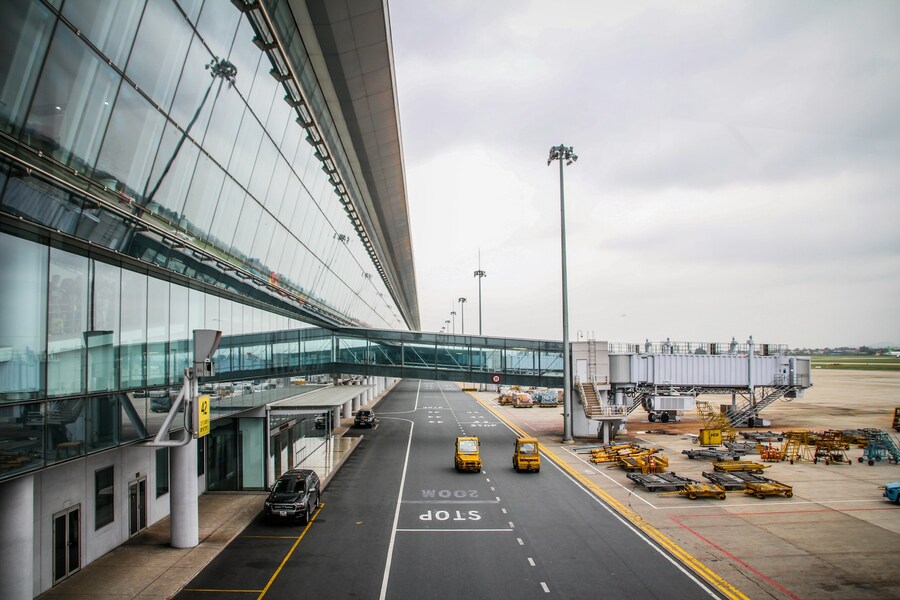
Source: T.H. Chia/Unsplash
Every commercial flight operates under a strict timeline known as the turnaround window. From the moment an aircraft parks at the jet bridge to the moment it pushes back for its next flight, every second is calculated. Gate agents serve as the ultimate operational multi-taskers during this window, bridging the gap between ground crews, flight decks, cabin stewards, and customer service systems.
To help travelers better navigate this complex environment, let's explore the six most critical behavioral changes gate agents wish you would make to optimize the boarding process.
1. Address Your Administrative Needs Long Before the Boarding Process Begins
One of the most frequent friction points at the departure gate is the passenger who approaches the podium to resolve a complex ticketing or seating issue just as the boarding announcement is made. Once an inbound aircraft is cleaned, provisioned, and cleared for passenger boarding, the gate agent's primary operational focus shifts entirely to scanning passes and monitoring the countdown clock.
If you require a seat assignment change, need to verify your status on a standby or upgrade list, or must secure gate-check baggage tags for a stroller or car seat, you must manage these requests early. The ideal window to approach the podium is between 30 and 45 minutes prior to the scheduled boarding time, well before the general boarding process begins and the agent's focus shifts exclusively to the manifest. During this pre-boarding lull, agents have the administrative bandwidth to navigate the airline's internal reservation database without delaying an entire queue of passengers.
Approaching the desk too early can also be counterproductive. When an agent first arrives at a gate, they require a few minutes of uninterrupted time to securely log into their terminal, review the specific aircraft manifest, note potential weight restrictions, and coordinate with the inbound flight crew. Waiting until the agent has completed these critical opening protocols, but before general boarding commences, ensures your request will be handled with undivided attention.
2. Pay Close Attention to Gate PA Announcements Instead of Tuning Out
Terminal gates are noisy environments filled with overlapping sensory data, making it easy to tune out overhead public address (PA) announcements. Many travelers rely completely on digital push notifications via airline mobile applications. While automation is highly convenient, digital notifications are occasionally subject to cellular network latency or data lag, meaning the spoken announcements at the gate remain the most precise, real-time source of truth.
Gate agents use the microphone to broadcast crucial, fluid updates regarding maintenance delays, abrupt gate changes, catering issues, and specific boarding procedures. When passengers ignore these audible directives, it leads to a redundant influx of questions at the podium. An agent who must repeatedly answer, "Which group are you boarding?" or "Is this flight going to Chicago?" is pulled away from handling operational anomalies, processing standby clearings, or coordinating with the ramp agents below.
Before approaching the desk to ask a basic informational question, make it a habit to check the flight information display system (FIDS) screens mounted directly above the podium. These screens display the identical real-time data fed directly from the airline's operational control center, showing your exact flight status, current destination, and active boarding group.
3. Maintain Complete Physical Readiness as Your Boarding Group Approach
The process of loading 150 to 300 individuals onto a narrow tube requires synchronized efficiency. Gate agents view the boarding line as a high-volume assembly line where minor, individual delays compound into major operational setbacks. The most common cause of queue stagnation is a lack of physical readiness when a passenger reaches the scanning scanner.
To keep the line moving, ensure that you have your digital or physical boarding pass fully visible and your government-issued identification accessible before stepping into the queue. If you are utilizing a smartphone app for your airport reservation, take a moment to increase your screen's brightness to 100% and disable auto-rotation. Low screen brightness frequently prevents the optical gate scanners from reading QR codes, forcing the agent to manually type in your confirmation code or reprint a paper ticket.
Moreover, please refrain from crowding the boarding lanes before your specific group number is officially called. This phenomenon, often referred to in the travel industry as "gate lice," creates physical blockades that prevent passengers in early priority bands, families requiring extra assistance, and active military personnel from reaching the podium. Standing in the incorrect lane or presenting a ticket for the wrong leg of a connecting flight forces a manual computer override, halting the line and adding stress to the gate team.
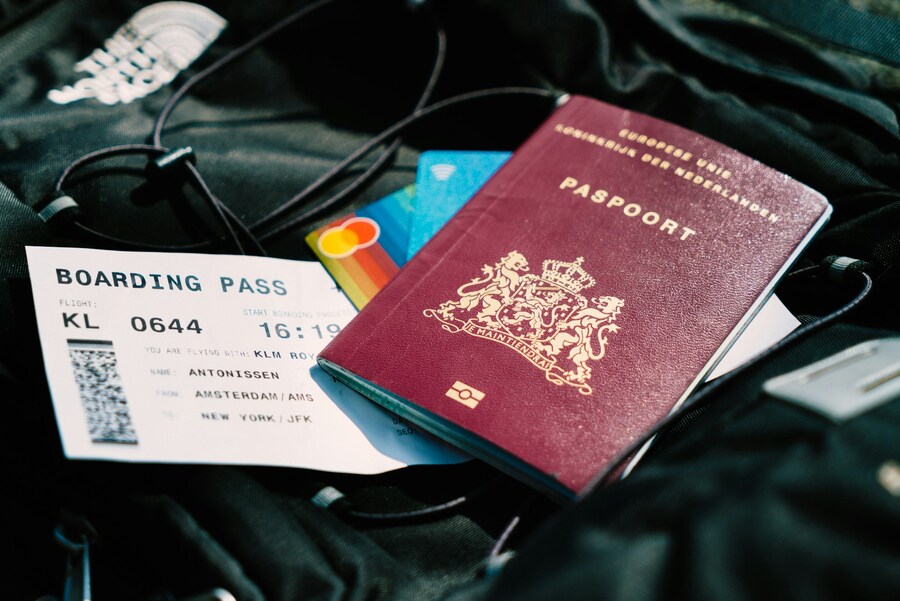
Source: CardMapr.nl/Unsplash
4. Recognize That Agent Screen Time Equals Operational Multitasking
A common source of passenger frustration is observing a gate agent staring intently at their computer monitor and typing rapidly while a line of travelers forms at the desk. It can easily feel as though you are being deliberately ignored or that your customer service needs are being trivialized. In reality, the agent is engaged in complex, time-sensitive system balancing.
Within the span of a typical 30-minute boarding window, a gate agent must execute a massive checklist of digital tasks. They are updating fuel-load weights based on final passenger counts, tracking inbound connecting flights to determine if they can hold the door for late arrivals, arranging wheelchair and aisle-chair assistance with ground handlers, and verifying the hazardous materials documentation for cargo riding in the belly of the aircraft.
In addition, gate agents are responsible for the physical operation of the jet bridge, requiring them to constantly step away from the desk to communicate with the lead flight attendant or secure the aircraft door. If an agent doesn't immediately make eye contact or greet you, it's because they are executing a sequence of keystrokes that directly impacts the safety and legality of the flight's departure.
5. Cultivate Patience to Leverage the Agent's Discretionary Goodwill
Gate agents frequently serve as the lightning rods for consumer anger regarding weather delays, mechanical cancellations, strict baggage size limitations, and missed connections. However, frontline gate employees rarely have any role in creating these structural issues. Air traffic control restrictions are mandated by the Federal Aviation Administration (FAA), and mechanical delays are strictly driven by safety protocols engineered to protect passenger lives.
When dealing with irregular operations (IRROPS), a traveler's attitude directly dictates the quality of their outcome. Gate agents possess a significant amount of discretionary power when navigating seating arrangements, standby lists, and rebooking routing options. While airline software programs automate basic rebooking functions, an experienced agent can manually search alternative hubs, look for partner airline availability, or waive certain restrictions for a customer who treats them with dignity and professional courtesy.
Aggressive behavior, raised voices, or demanding ultimatums typically result in an agent adhering strictly to the bare-minimum company policy. If an unexpected delay occurs, take a deep breath, approach the desk with a calm demeanor, and frame the situation as a joint problem-solving exercise. Treating the agent as an ally rather than an adversary is the single most effective way to secure a favorable customer service resolution.
6. Understand the Firm Boundaries of Internal Airline Authority
While gate agents are highly trained operational logistics professionals, their institutional authority has clear, systemic limitations. Passengers routinely approach the gate podium demanding complimentary first-class upgrades, financial compensation vouchers for weather-related events, or explicit exemptions to federal safety laws, such as carry-on baggage size allowances.
Modern airline operations are dictated by automated, algorithm-driven software systems. Upgrade hierarchies are hardcoded based on frequent flyer elite status tiers, original fare class codes, and corporate credit card relationships; an agent cannot simply bypass this digital queue to hand out a premium seat to an exceptionally polite passenger. Similarly, compensation structures for flight delays are determined by specific corporate matrices that categorize the root cause of the delay – meaning agents cannot authorize cash vouchers or hotel rooms if a storm closes down an arrival airport.
If an agent informs you that they are unable to execute a specific request, it's almost certainly a structural system limitation rather than a personal refusal. If you feel your circumstance truly warrants an exception, politely ask if a customer service supervisor or a lead gate agent is available to review the scenario. If a solution cannot be reached at the gate, your best course of action is to contact the airline's dedicated corporate customer care team or utilize their digital chat portals, which are explicitly staffed to handle post-travel claims and long-form disputes.
The Professional Travel Takeaway: Smooth transit is built on personal preparation. Just as you protect your travel budget by researching the optimal price for parking ahead of time, you can protect your peace of mind by respecting the professional constraints under which your gate crew operates.
Streamlining Your Next Journey from Departure to Arrival
Source: Oleg Laptev/Unsplash
Successful air travel relies entirely on mitigating variables before you ever arrive at the terminal. Managing your airport logistics ahead of time eliminates the frantic rushes that lead to gate-side stress. A critical component of this preparation is securing your ground transportation and vehicle storage well in advance of your departure date.
By utilizing our reservation system at AirportParking.deals, you can instantly compare rates, read verified supplier reviews, and lock in premier off-site parking slots at a fraction of the cost of drive-up terminal spaces. Securing an airport reservation for your vehicle ensures you arrive at the airport with ample time to check your bags, clear security, and approach your gate agent during the optimal pre-boarding window. Plan ahead, respect the operational realities of the terminal crew, and book your guaranteed parking spot with us today for a seamless, professional travel experience.


