

Navigating modern airports is often stressful, with long security lines and cumbersome screening procedures casting a shadow over your journey. Fortunately, TSA PreCheck offers an effective remedy by allowing pre-approved, low-risk travelers to move through checkpoints with exceptional speed and convenience. This expedited program eliminates major terminal friction points, transforming a chaotic pre-flight routine into a predictable, stress-free transition. Understanding how to apply and maximize these benefits is your definitive key to unlocking a seamless, highly efficient airport experience.
So, what are the core benefits and operational dynamics of TSA PreCheck?

Source: Tim Dennert/Unsplash
The expedited screening lane maximizes comfort and momentum. Enrolled members bypass traditional physical disruptions, enjoying a simplified protocol that drastically reduces wait times while maintaining terminal efficiency.
The on-person conveniences
When walking through an expedited security lane, the standard requirements that typically stall the queue are waived. You don't need to remove your shoes, which saves time and spares you from walking barefoot across the airport floor. Light jackets, blazers, and outerwear can remain on your person, eliminating the need to wrestle with layers while balancing plastic bins. In addition, belts don't need to be unbuckled and placed on the conveyor belt, allowing you to pass through the metal detector without the usual awkward readjustments afterward.
Simplified baggage requirements
The advantages extend directly to how you manage your carry-on luggage. In standard lanes, travelers must unpack their bags, pulling out full-sized laptops, tablets, and other large electronics to place them flat in separate bins. Under the expedited framework, all electronic devices remain securely packed inside your luggage. Moreover, the mandatory quart-sized bag containing your liquids, gels, and aerosols stays tucked away in your suitcase. This drastically reduces the number of bins you need to manage and prevents the frantic repacking that often occurs at the end of the security belt.
Efficiency by the numbers
The structural differences between traditional and expedited screening result in massive time savings. Statistically, the vast majority of accredited travelers pass through the dedicated lines in less than 10 minutes, even during peak morning rush hours and busy holiday weekends. The lines move at a continuous pace because the passengers within them are pre-screened and familiar with the rapid flow. This predictability allows you to better plan your arrival at the terminal, cutting down on the excessive buffer time you would otherwise need to survive an unpredictable checkpoint crowd.
How do you navigate the application and enrollment process?
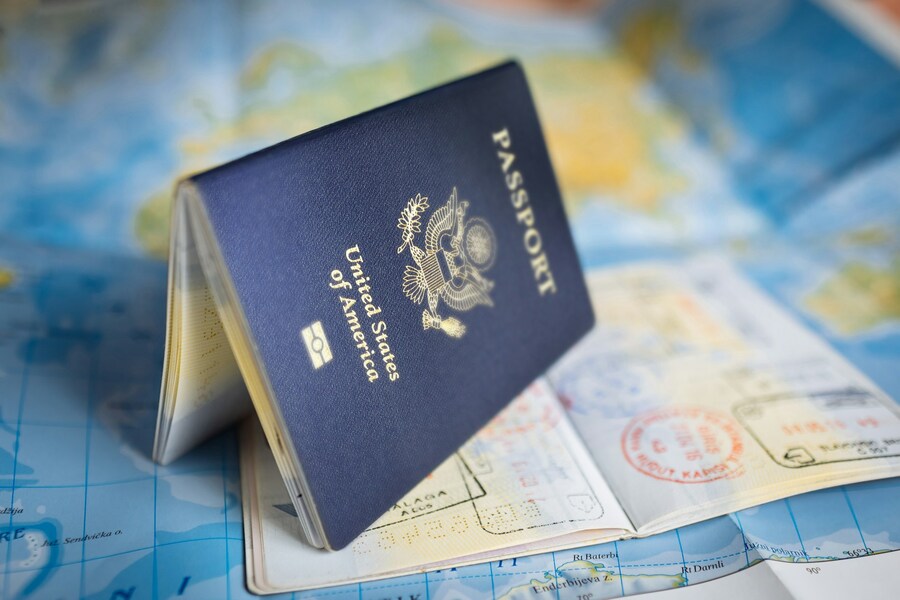 Source: Global Residence Index/Unsplash
Securing access to these expedited lanes requires completing a formal application process managed by authorized federal enrollment providers. The program is specifically structured to identify low-risk individuals through a background check and a brief in-person appointment. While it requires a modest upfront investment of time and money, the return on that investment is realized across multiple years of hassle-free air travel.
Confirming eligibility and choosing a provider
The program is broadly accessible to citizens, nationals, and lawful permanent residents of the United States. The initial step involves submitting an online application via the official government portal, where you'll provide basic biographical data and background information. During this stage, you'll select an official enrollment partner, such as
The in-person appointment
Once the digital paperwork is submitted, you'll schedule an interview at a designated enrollment center. This appointment is generally brief, often lasting 15 minutes or less. You must bring specific, original proof of identity and citizenship, such as a valid U.S. passport, or a combination of a driver's license and a certified birth certificate. A trained agent will verify your documentation, capture your digital fingerprints, and take a biometric photo for the federal background check.
Understanding costs and validity periods
The application fee varies slightly depending on the specific enrollment provider you choose, generally ranging between $76 and $85. This fee covers the cost of background vetting for a full 5-year period, making the annualized cost incredibly low. It's worth noting that the agency occasionally introduces targeted promotions, such as rare fee discounts for younger demographics, to encourage early enrollment among frequent flyers. Once approved, your membership remains active for 5 years, and subsequent renewals can easily be completed online at an even lower price point, ensuring uninterrupted access to faster security lanes.
What's a Known Traveler Number and how do you use it?

Source: George Prentzas/Unsplash
Successfully passing the background check culminates in the issuance of a unique identification string known as a Known Traveler Number, or KTN. This number is the literal key that triggers your expedited status on your boarding pass. Simply being enrolled in the program isn't enough to grant you access to the express lane; the credential must be actively communicated to the airline during the reservation process.
Integrating the credential into your bookings
To ensure you receive the dedicated indicator on your boarding pass, you must input your KTN into every flight reservation you make. If you frequently fly with specific airlines, the most efficient approach is to save this number directly into your frequent flyer profiles. Once saved, the airline's reservation system will automatically apply the credential to all future itineraries. If you are booking a one-off flight or traveling with a new carrier, look for the field labeled "Known Traveler Number" or "Traveler ID" during the passenger information entry phase.
Verifying your status on the boarding pass
Prior to heading to the airport checkpoint, always inspect your digital or printed boarding pass. Look closely for a distinct, official marking, usually displayed clearly as "TSA PRE" or "TSA PreCheck." This specific indicator signals to the airport security personnel and the automated gate scanners that you are authorized to enter the expedited screening queue. If the marker is missing from your pass, you'll be directed to the standard security line, even if you possess a valid membership card or confirmation email.
Troubleshooting a missing indicator
If you discover that your status hasn't been generated on your boarding pass, the issue can almost always be traced back to a clerical error. The most common culprit is a name mismatch. The first name, middle name, and surname on your airline ticket must precisely match the names listed on your government enrollment profile. Even a minor discrepancy, such as a missing hyphen or a shortened nickname on your ticket, can prevent the automated system from validating your KTN. If this occurs, contact the airline's customer service desk or speak with a ticketing agent at the counter to verify that your data aligns perfectly before you attempt to pass through security.
How does the program compare to other vetting systems?
.jpg) Source: Google Search
Source: Google Search
As you evaluate your options for smoother airport transits, you'll likely encounter several other trusted traveler initiatives. While they all share the fundamental goal of optimizing your path through the terminal, they serve distinctly different operational purposes. Choosing the right program depends heavily on your specific regional and international flying habits.
TSA PreCheck vs. Global Entry
While the domestic program speeds up your departure from U.S. airports, Global Entry is designed to accelerate your arrival when returning from an international destination. Managed by U.S. Customs and Border Protection (CBP), Global Entry allows pre-approved travelers to utilize automated kiosks to bypass traditional passport control lines. The most critical detail for travelers to understand is that Global Entry automatically includes full domestic expedited screening benefits. If you anticipate traveling outside the country even once or twice over the next 5 years, paying the slight premium for Global Entry represents an exceptionally smart upgrade.
Regional variations and advanced technologies
For individuals who regularly cross the northern or southern borders by land or air, specialized programs like NEXUS and SENTRI offer tailored customs processing while still bundling domestic expedited screening access. Concurrently, the landscape of airport security is evolving with the introduction of biometric technology. Many major domestic hubs are rolling out facial-recognition lanes, often referred to as Touchless ID. These cutting-edge lanes allow registered trusted travelers to confirm their identity using digital cameras rather than physically presenting a driver's license or passport, representing the next logical step in frictionless air transit.
What advanced operational guidelines should every member know?
 Source: Xavier Mouton Photographie/Unsplash
Achieving trusted traveler status brings immense convenience, but it also requires a clear understanding of the operational boundaries and responsibilities that govern the program. Being informed prevents unexpected surprises at the airport and helps you navigate family travel smoothly.
Family travel dynamics with minors
One of the most frequent questions surrounding expedited security involves traveling with children. The regulations are highly favorable for families, though they depend strictly on the age of the minors. Children who are 12 years old or younger are permitted to accompany an eligible parent or guardian into the express lanes without needing an independent membership. For teenagers between the ages of 13 and 17, the rule shifts slightly. They may join their enrolled parents in the line, but only if the official expedited indicator is explicitly printed on the teenager's own boarding pass, which occurs automatically when they are booked on the same reservation. If a teenager routinely flies alone, they must undergo the standard application process to secure their own personal KTN.
Random vetting protocols and compliance
It's vital to recognize that enrollment doesn't grant an absolute guarantee of expedited screening on every single flight. The federal government maintains a strict policy of unpredictable, randomized security checks to ensure the integrity of airport defense systems. On rare occasions, you may find that the expedited lane is closed, or you may be directed to a standard lane for a more comprehensive check. Maintaining strict compliance with all standard aviation rules is imperative, as any civil penalties, security violations, or serious legal infractions can result in the immediate and permanent revocation of your trusted status.
Optimizing your ground logistics
A truly seamless airport experience requires looking beyond the security line to address your entire terminal arrival strategy. Even with the fastest security access, a bottleneck at the parking lot can easily derail your timeline. For travelers departing from southern California, utilizing dedicated digital resources to secure optimized SAN Airport parking in advance ensures that your transition from your vehicle to the terminal entrance is completely fluid. Coupling trusted traveler benefits with competitive SAN parking deals eliminates the stress of searching for an open space, allowing you to walk straight to the express checkpoints with total confidence.
Conclusion

Source: Kaja Reichardt/Unsplash
Investing in expedited screening status completely redefines modern air travel by removing the most frustrating physical barriers of the checkpoint process. The program restores calm and predictability to your pre-flight routine, allowing you to spend pre-departure hours relaxing in a terminal lounge rather than waiting in anxious lines. Ultimately, aligning your background vetting, flight profiles, and terminal logistics ensures that every journey begins on a smooth, highly efficient note.


