

The concept of travel has always been inextricably linked to the idea of the souvenir. Traditionally, we return from our adventures with suitcases stuffed with physical tokens of our transit: a hand-woven textile from a Peruvian market, a delicate ceramic bowl from a Kyoto workshop, or perhaps a mass-produced keychain from a duty-free shop at the eleventh hour. These objects serve as anchors for our memories, tangible proof that we were once somewhere else, experiencing something different. However, in the contemporary landscape of global exploration, a new and far more permanent trend is taking hold of the intrepid traveler's imagination. We are witnessing the definitive rise of "tattourism," a cultural phenomenon where the ultimate memento isn't something you carry in your luggage, but something you carry under your skin.
This shift represents a move away from consumerist collecting toward a more visceral, experiential form of remembrance. Tattourism is the practice of seeking out tattoo artists in foreign lands to commemorate a journey, a feeling, or a specific moment in time. It's about transforming the body into a living map of one's life experiences. Instead of a postcard that will eventually yellow or a T-shirt that will inevitably fray, a travel tattoo is a permanent installation of art that matures alongside the traveler. It's a commitment to a memory, etched in ink, ensuring that the essence of a destination remains a part of the individual's physical identity forever. As more people prioritize experiences over possessions, the skin has become the ultimate canvas for the modern voyager.
So, is the rise of permanent souvenirs changing how we experience the world?
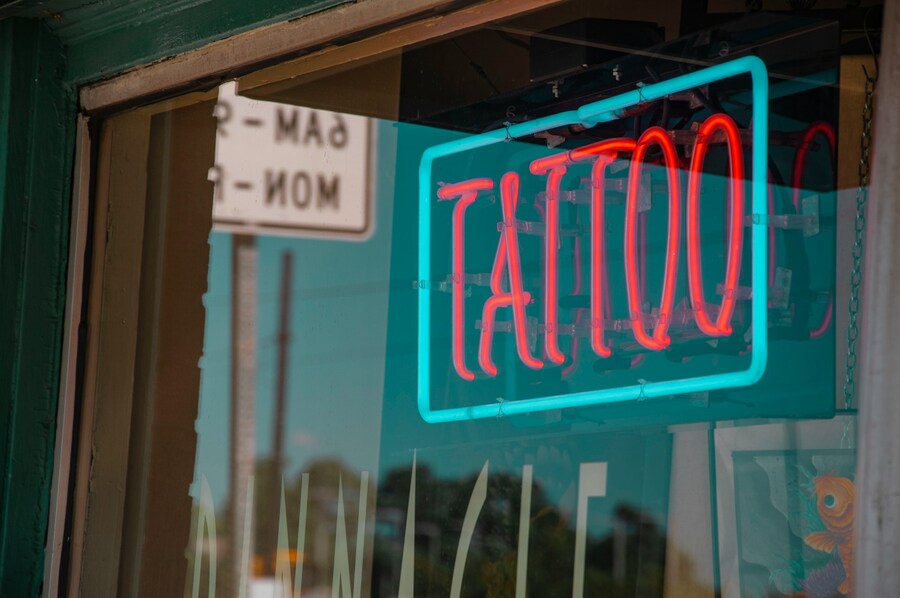 Source: Maria Oswalt/Unsplash
Tattourism replaces passive souvenirs with active cultural exchange. By integrating studios into luxury hotels, the industry transforms tattooing into a sophisticated, immersive storytelling experience that fosters deep, permanent connections to destinations.
The evolution of the in-hotel tattoo studio
In the heart of Manhattan's Lower East Side, the intersection of street art and high-end hospitality has birthed a new kind of destination. One particular boutique hotel, nestled in the vibrant Freeman Alley, has become a pilgrimage site for those looking to blend their accommodation with their art. The entrance itself sets the tone – a graffiti-lined passageway that feels like a portal into an urban gallery. Inside, the atmosphere is a maximalist dream, where the walls are as decorated as the guests. The presence of a permanent tattoo parlor within such a space isn't merely a gimmick; it's a reflection of the neighborhood's pulse. The studio began as a series of organic pop-up events, where the energy of live music and visual art created a natural synergy with the tattooing process. It proved that travelers are looking for more than just a bed; they are looking for a "New York experience" that they can take home with them in the most literal sense.
This model is being replicated in various forms across the globe. In the Meatpacking District, another boutique establishment has partnered with world-renowned celebrity artists to offer high-end, appointment-only sessions. Here, the focus is on the "story" behind the ink. These aren't just tattoos; they are bespoke narratives. The high price point and the exclusivity of the setting cater to a demographic that views tattooing as a significant investment in their personal brand and history. This evolution suggests that the "tattourist" is often someone who values the prestige of the artist and the uniqueness of the location as much as the design itself. The studio becomes an extension of the hotel's creative energy, offering a space where guests can stand out and express their evolving selves.
Global destinations embracing the needle
The phenomenon is by no means restricted to the urban jungles of the United States. Across the world, destinations are utilizing local artistry to offer travelers something truly irreplaceable. On the sun-drenched Pacific Coast of Mexico, luxury resorts are partnering with local artists to translate the beauty of the Riviera Nayarit into vibrant, full-color skin art. For many travelers, getting inked in Mexico is a way to honor the profound connection they feel to the country's food, people, and rhythmic daily life. A tattoo of a traditional Mexican doll or a local botanical element becomes a bridge back to those warm afternoons long after the tan has faded.
Similarly, in the rugged landscapes of Iceland, the trend has taken a more ethereal turn. Hotels in the "land of fire and ice" have begun collaborating with local artists to help travelers commemorate their journeys through the dramatic Nordic scenery. These sessions are often highly personalized, allowing the guest to have creative control over how they represent their time spent among glaciers and volcanoes. It's a way of supporting the local creative economy while providing the traveler with a "slice" of the destination that they can keep forever. Whether it's a South African protea or a minimalist Icelandic rune, these tattoos serve as a constant, internal reminder of a specific time and place that changed the wearer's perspective.

Source: Jordan Whitt/Unsplash
The psychological impact of the travel tattoo
What is it about travel that makes us want to mark our bodies? Psychologically, a trip to a foreign land often acts as a catalyst for personal growth or a shift in identity. We are more open, more observant, and often more daring when we are away from the routines of our daily lives. A tattoo obtained during this period of heightened awareness acts as an anchor. It captures the "vacation version" of ourselves – the version that's adventurous, curious, and free. When we return to the mundane world of bills and commutes, the tattoo remains a defiant testament to our capacity for wonder.
For many, the process is about more than just the end result; it's about the "where" and the "why." There's a profound sense of satisfaction in looking at a piece of art on your arm and instantly being transported back to a specific afternoon in a Roma neighborhood or a rainy morning in Reykjavik. It's a form of chronological mapping. Each tattoo represents a chapter in a life well-traveled. As one avid collector noted, getting a tattoo in a destination you connect with feels like taking a part of that place with you, while simultaneously leaving a piece of yourself behind. It's a spiritual and physical exchange that a mass-produced souvenir simply cannot replicate.
Navigating the logistics of tattourism
While the romanticism of the travel tattoo is undeniable, the practicalities require careful consideration. The modern tattourist is a researcher. They don't just walk into the first shop they see; they follow artists on social media months in advance, booking slots alongside their flight reservations. This level of planning has transformed the tattoo artist into a key stakeholder in the travel itinerary. For those traveling through Washington State, for instance, the journey often begins with the logistical details of arrival and departure. Ensuring your vehicle is secure while you are away chasing art and experiences is a fundamental step. If you are flying out of the Inland Northwest, you might find that looking into GEG Airport parking options is the best way to start your trip with peace of mind. Finding reliable GEG parking deals allows you to focus your budget where it matters most: on the high-quality artist you've spent weeks vetting in your destination city. By handling these earthly concerns early, the traveler frees their mind for the creative and emotional journey ahead.
Safety and hygiene are, of course, paramount when seeking ink abroad. The rise of tattourism has been supported by a global standardization of safety practices, but the responsibility still lies with the traveler to ensure their chosen studio meets professional criteria. This is another reason why the in-hotel studio model has been so successful; it provides a layer of institutional trust. When a reputable hotel brand puts its name behind a tattoo artist, it offers a level of assurance to the traveler who might be hesitant to wander into an unfamiliar shop in a foreign city. This professionalization of the industry has made the "souvenir tattoo" accessible to a much broader demographic, including those who might never have considered a tattoo in their home environment.
The bottom line

Source: Anima Visual/Unsplash
Ultimately, the surge in tattourism reveals a fundamental truth about why we travel in the first place: we want to be changed. We don't go to the other side of the world just to see things; we go to feel things, to learn, and to evolve. A traditional souvenir is an external object that we own, but a tattoo is an internal change that we become. It's the most honest way to acknowledge that a journey has left a mark on us. By choosing the needle over the gift shop, travelers are opting for a narrative that's literally written into their history.
As we look toward the future of global exploration, it's clear that the body will continue to serve as a canvas for our greatest adventures. Tattourism isn't just a fleeting trend; it's a manifestation of our desire for permanence in an increasingly ephemeral world. In a digital age where photos are lost in the cloud and experiences are often curated for social media, the tattoo stands as something undeniably real. It's a commitment, a memory, and a masterpiece all rolled into one. So, the next time you find yourself in a corner of the world that feels like home, or a city that challenges everything you thought you knew, consider skipping the postcard. Find an artist, find a design that speaks to your soul, and bring home a souvenir that will truly last a lifetime. After all, the best stories aren't just told – they are worn!


