

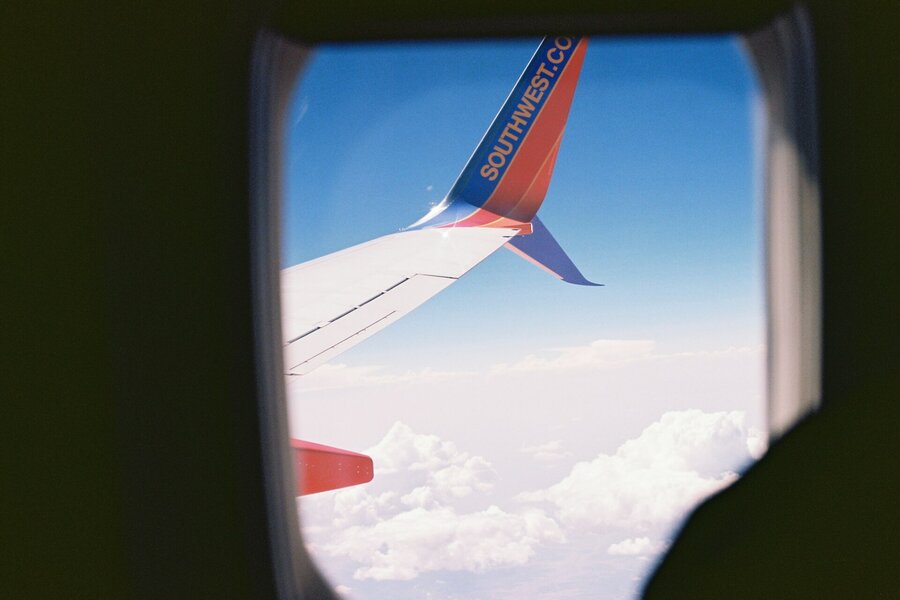
For decades, the standard response for any cross-border European journey was to browse the websites of budget airlines. The promise of a 40-euro flight that theoretically took 90 minutes was an intoxicating prospect for travelers on a budget and a clock. However, as the logistical landscape of 2026 unfolds, the friction points of air travel have intensified. Between the trek to remote secondary airports, the increasing complexity of luggage restrictions, and the sheer unpredictability of security queues, that 90-minute flight often mutates into a 6-hour door-to-door odyssey. Meanwhile, Europe has doubled down on its high-speed rail infrastructure, creating a network of "steel rivers" that connect city centers with a grace and efficiency that air travel simply cannot replicate. The debate is no longer just about carbon footprints; it's about reclaiming the dignity of the journey and the value of your time.
So, why is European rail finally winning the battle against short-haul flights?
 Source: Ben Moreland/Unsplash
To understand why the train is increasingly the superior choice, one must look past the simple transit time shown on a ticket. Air travel is fundamentally burdened by "dead time" – those hours spent in transit to the airport, standing in line for liquid checks, and waiting at baggage carousels. High-speed rail, by contrast, operates on a principle of "active time." You arrive at a central station 15 minutes before departure, walk directly onto the platform, and find yourself in a spacious seat with reliable Wi-Fi before the train has even cleared the city limits. This seamlessness is the ultimate travel hack. When the total 'door-to-door' time is calculated, rail frequently emerges as the faster option for routes under 500 miles. Moreover, the physical experience of rail travel in 2026 has been elevated by new rolling stock and expanded alliances, making the transition from one country to another as smooth as a suburban commute.
The London to Paris connection: a masterclass in efficiency
The Eurostar remains the gold standard for rail beating air travel. While a flight from Heathrow to Charles de Gaulle might technically take an hour, the reality is far more grueling. You must factor in the journey to the airport, the requirement to arrive 2 hours early, and the subsequent commute from the fringes of Paris into the 1st Arrondissement. The train, departing from St. Pancras International and arriving at Gare du Nord, places you in the heart of the city in just over 2 hours.
The primary advantage here is the "one-stop" security and immigration process. Because you clear French border controls in London, you simply walk off the train in Paris and onto the Metro. In 2026, with the integration of more biometric gates, this process has become even more streamlined. For a business traveler or a tourist with limited days, the ability to work uninterrupted for 2 hours with a full-sized table and a power outlet is a luxury that no economy-class "middle seat" on a budget carrier can offer.
The Iberian sprint: Madrid to Barcelona
In Southern Europe, the competition between the AVE (high-speed rail) and the "Puente Aéreo" (air bridge) has largely been settled in favor of the tracks. The line between Madrid and Barcelona is one of the most efficient in the world, with trains reaching speeds of up to 310 kilometers per hour. The journey takes approximately 2.5 hours, cutting through the heart of the Spanish countryside.
The real hack for this route is the recent liberalization of the Spanish rail market. In 2026, multiple operators – Renfe, Iryo, and Ouigo – compete on this same track, driving prices down and service levels up. You can now choose between a budget-friendly double-decker train or a premium "executive" experience that rivals first-class air travel. When you consider that Madrid's Atocha station and Barcelona's Sants station are both centrally located and connected to extensive local transit, the plane – with its mandatory commute to Barajas or El Prat – becomes an unnecessary complication.
Central Europe's new golden triangle: Paris, Brussels, and Amsterdam
The northern corridor has seen a massive upgrade with the rebranding and interior renovation of the former Thalys fleet, now fully integrated under the Eurostar brand. Traveling from Paris to Amsterdam takes roughly 3 hours, with a quick stop in Brussels. This route highlights one of the most significant rail hacks: the "multi-city skip." Because the train stops in the center of Brussels and Antwerp, you can easily break up your journey for a lunch meeting or a quick museum visit without the logistical nightmare of checking back into an airport.
In 2026, the new "Ruby" trainsets provide enhanced storage for large suitcases, addressing one of the traditional complaints about rail travel. Unlike airlines that charge 40 euros for a carry-on bag, rail operators on this route typically allow 2 large suitcases and a personal item for free. For those traveling with gear or who simply refuse to participate in the "liquid baggie" ritual, the train is the only logical choice.
The Italian high-speed renaissance: Rome to Milan
Italy's rail network has undergone a transformation that makes it the envy of the continent. The Frecciarossa (Red Arrow) trains connecting Rome and Milan have essentially rendered the domestic flight route obsolete. Taking just under 3 hours, the train whisks you from Rome Termini to Milan Centrale.
The advantage here is the frequency. During peak hours, trains depart every 15 to 20 minutes. This level of flexibility is impossible for airlines to match. If you finish your meeting early in Milan, you can simply change your ticket on an app and board the next train home. There's no need to wait 4 hours for the next scheduled flight or pay an exorbitant "change fee." The Italian experience also offers a culinary hack: the "Bistrò" wagons on these trains serve actual Italian espresso and regional snacks, a far cry from the dehydrated pretzels and lukewarm coffee found at thirty thousand feet.
Source: Giu Vicente/Unsplash
Emerging routes: the 2026 Nordic and Baltic links
One of the most exciting developments in 2026 is the expansion of rail into regions previously dominated by regional jets. New high-speed connections in the Baltics and improved corridors between Germany, the Czech Republic, and Denmark are rewriting the map. The direct route from Prague to Copenhagen, via Berlin and Hamburg, is a prime example.
While an 11-hour journey might seem long compared to a 2-hour flight, the rise of "Comfortjet" trainsets equipped with children's cinemas and specialized working zones makes it a viable choice for families and digital nomads. It's about the quality of the time spent. On a train, you're productive or relaxed; on a plane, you're simply "in transit." These longer routes are also being bolstered by the revival of night trains, such as the European Sleeper, which allows you to board in Brussels or Amsterdam and wake up in Milan or Berlin, effectively saving you the cost of a hotel night and the stress of a morning airport dash.
The logistics hack: mastering the "first mile"
While we focus on the efficiency of the train once you're on board, the seasoned traveler knows that the journey begins at your front door. The ultimate travel hack for 2026 is the integration of ground logistics. Just as we look for the best rail fares, we must look for the best ways to reach our departure points. Even if you're a rail enthusiast, there are times when an international flight from a major hub like Detroit is unavoidable before you start your European rail adventure.
In these instances, planning your departure is as crucial as planning your arrival. Many travelers waste hours and hundreds of dollars on last-minute terminal parking. Instead, look for off-site solutions that offer a higher level of service. For example, finding competitive DTW parking deals through specialized booking platforms can save you enough money to pay for your first 3 high-speed rail tickets in Europe. Utilizing a service that provides a dedicated shuttle to the terminal ensures you arrive relaxed and ready for the long-haul leg of your trip. By securing your DTW Airport parking in advance, you remove one of the most common stressors of air travel, allowing you to focus on the more enjoyable aspects of your itinerary.
Why the "luggage hack" favors the rail
One of the most overlooked "hacks" of rail travel is the freedom it provides regarding personal belongings. Airline baggage policies have become increasingly punitive, with "Basic Economy" fares often excluding even a standard overhead bin bag. On a European train, the rules are governed by common sense rather than a micrometer.
You can bring full-sized bottles of wine, local olive oils, or high-end toiletries without worrying about the 100ml limit. This is particularly valuable for those visiting Europe's famous markets. If you buy a beautiful set of kitchen knives in Solingen or a vintage lamp in a Parisian flea market, you can simply carry it onto the train. On a plane, these items require a checked bag, a protective case, and a prayer that they won't be lost or broken in the hold. Rail travel respects the traveler's property, providing a level of autonomy that air travel has long since abandoned.
Sustainability and the "slow travel" philosophy
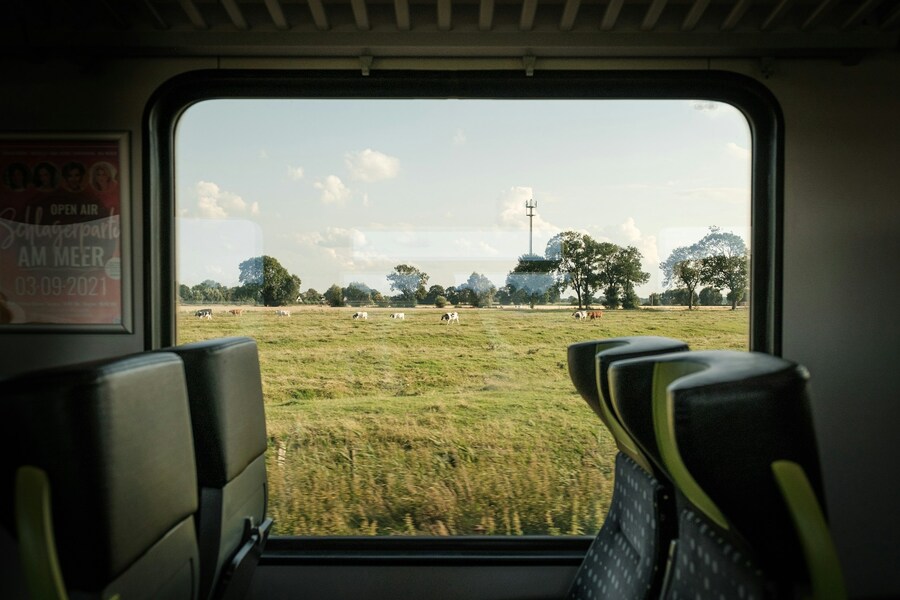
Beyond the practicalities of time and cost, the shift toward rail is driven by a fundamental change in travel philosophy. In 2026, the concept of "slow travel" has moved from a niche trend to a mainstream preference. Travelers are increasingly aware that the carbon impact of a short-haul flight is disproportionately high. Taking the train isn't just a logistical choice; it's a statement of intent. It allows you to see the landscape change from the rolling hills of the French countryside to the jagged peaks of the Alps. This visual connection to the geography of the continent provides a sense of place that's completely lost in the sanitized, window-shaded environment of a modern jet. When the train is faster, cheaper (when booked in advance), and infinitely more comfortable, the environmental benefit becomes the "cherry on top" of a superior travel experience.
The bottom line
Source: Alexander Bagno/Unsplash
The verdict for 2026 is clear: for most major city-to-city corridors within Europe, the train has officially outpaced the plane. The combination of central station locations, the absence of intrusive security protocols, and the ability to remain productive throughout the journey makes rail the definitive "hack" for the modern traveler. While air travel still holds the advantage for long-haul transcontinental hops, short-haul flight is becoming a relic of an era that prioritized speed on paper over efficiency in reality. By choosing the tracks over the clouds, you aren't just choosing a mode of transport; you're choosing a better way to experience the world. From the high-speed AVE in Spain to the reliable Eurostar connections in the North, the future of European travel is firmly on the rails. Wherever your journey takes you this year, may your connections be smooth, your views be breathtaking, and your travels be filled with wonder and joy!


