

Modern professional life rarely stops at the boarding gate. For the digital nomad, the consultant, or the remote entrepreneur, a 10-hour flight isn't just a transition between time zones; it's a critical window for deep work. However, the reality of the economy cabin often presents a formidable challenge to productivity. Between the narrow seat pitch, the absence of ergonomic support, and the symphony of ambient engine noise and cabin chatter, the environment is far from a traditional office. Succeeding in this space requires a tactical approach to gear. It isn't about bringing more items, but about bringing the right ones – tools that maximize every square inch of your tray table and every minute of your battery life.
Navigating the logistical hurdles of air travel starts long before you reach the cabin. Efficiency begins at the curb, and the seasoned traveler knows that a smooth departure sets the tone for the entire journey. By the time you are settling into seat 34b, your success depends on a carefully curated kit of "Nomad Tech." These are the gadgets designed to turn a cramped economy seat into a functional, high-speed workstation, ensuring that when the wheels touch down, your inbox is empty and your projects are complete.
So, how can you turn a cramped economy seat into a productive mobile office?
 Source: kris/Unsplash
The fundamental problem with working in the economy is the lack of physical space. When the passenger in front of you reclines, your laptop screen is suddenly inches from your face, and your wrists are forced into a cramped, unnatural angle. To combat this, the modern nomad must focus on three core pillars: compact ergonomics, silent focus, and redundant power. By addressing these areas, you can bypass the limitations of the cabin and maintain a professional output regardless of your altitude.
The ergonomic foundation: portable stands and peripherals
Ergonomics are often the first casualty of air travel. Hunching over a laptop for several hours is a recipe for neck strain and reduced focus. To solve this, an ultra-slim, foldable laptop stand is a non-negotiable requirement. In the current market, models that fold to a thickness of less than half an inch are the gold standard. These stands raise the screen to eye level, which not only saves your posture but also creates a valuable sliver of space underneath the laptop for a notepad or smartphone.
However, once the laptop is raised, the built-in keyboard becomes unusable. This necessitates a secondary input device. A low-profile, mechanical wireless keyboard that fits within the footprint of a standard tray table is essential. These devices allow your arms to remain at a comfortable 90-degree angle, even in tight quarters. When paired with a vertical ergonomic mouse – designed to reduce forearm torsion – you create a workstation that rivals a home office setup in terms of physical comfort. This setup is particularly effective because it allows you to push the laptop stand further back toward the seat in front of you, giving you more "breathing room" for your hands and wrists.
Achieving absolute focus: the new standards in noise cancellation
The economy cabin is a noisy ecosystem. From the constant 80-decibel hum of the jet engines to the unpredictable sounds of fellow passengers, the environment is designed to distract. High-fidelity
For the serious professional, over-ear headphones remain the preferred choice due to their superior battery life and the physical seal they provide. The latest flagship models now feature dedicated processors that specifically target the frequency of jet engines and the mid-range frequencies of human speech. If space is at an absolute premium, the newest generation of ANC earbuds offers a compelling alternative. These small devices now include "transparency modes" that allow you to hear cabin announcements without removing the hardware, ensuring you don't miss the meal service or important safety updates while in the "zone."
Power management in a cordless world
While many modern aircraft offer in-seat power, relying on them is a gamble. Outlets in economy are notoriously finicky; they are often loose, causing chargers to fall out, or they simply fail to provide enough wattage to charge a high-performance laptop while it's in use. A high-capacity, airline-approved portable power bank is the ultimate insurance policy.
The ideal power bank for today's standards is one that supports 100W Power Delivery (PD) through a USB-C port. This ensures it can charge even the most demanding 16-inch laptops at full speed. Moreover, look for "pass-through" charging capabilities, which allow you to charge the power bank and your laptop simultaneously from a single wall outlet during a layover. This redundancy eliminates "battery anxiety" and allows you to keep the screen brightness high – a necessity when dealing with the glare from an open window shade three rows away.
Smart organization: cable management and tech pouches
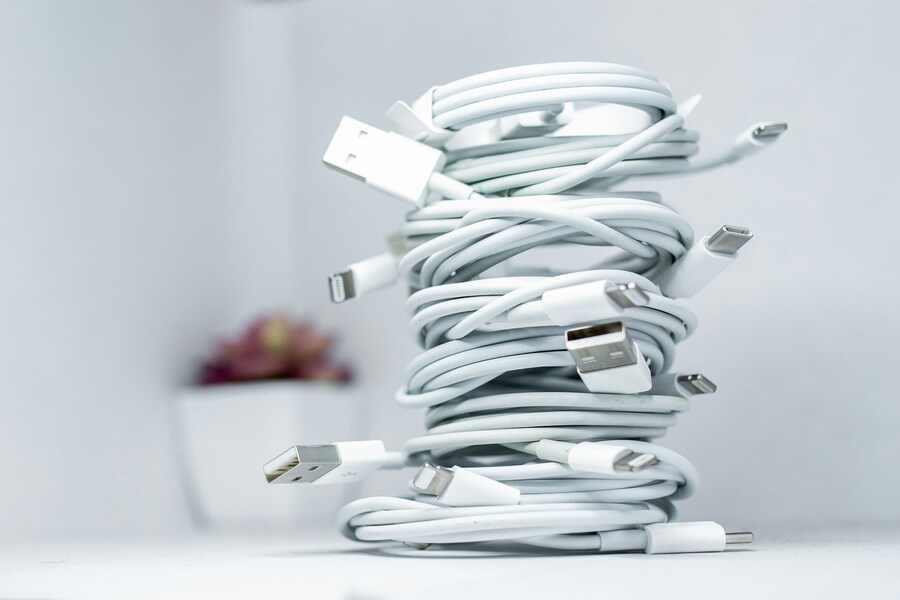
A cluttered tray table leads to a cluttered mind. When you are working in a space that's less than 18 inches wide, every cable and dongle becomes a potential obstacle. The nomad tech kit is incomplete without a high-quality, semi-rigid tech organizer. These pouches are designed with elastic loops and mesh pockets to keep your charging cables, power bricks, and adapters perfectly segmented.
Using short, braided 1-foot cables instead of the standard 6-foot versions prevents "cable spaghetti" from spilling over into your neighbor's space or getting caught in the tray table hinge. Moreover, a small magnetic cable tie can keep your phone charging cord neatly routed along the side of your laptop, ensuring your limited workspace remains pristine and professional.
Multi-device synergy: portable monitors and tablets
For those who require more screen real estate than a single laptop can provide, the rise of ultra-thin portable monitors has been a game-changer. Modern 14-inch portable displays are now as thin as a smartphone and can be powered directly via a single USB-C cable from your laptop. This allows for a dual-monitor setup even on a standard economy tray, significantly boosting productivity for tasks like coding, data analysis, or video editing.
Alternatively, many professionals are opting for a "tablet-first" approach for the flight itself. Using a high-end tablet with a detachable keyboard allows for much greater flexibility when the passenger in front of you reclines. Because tablets lack a rigid hinge, they can be positioned at steeper angles or even held closer to the chest, making them the most versatile tool for the tightest of seats.
Connectivity and the invisible office
Working at 35,000 feet requires more than just hardware; it requires a seamless bridge to the digital world. While on-board Wi-Fi has become significantly faster and more reliable, it remains a public network with inherent security risks. A dedicated travel router that supports the latest encryption standards and provides a hardware-based VPN is a vital tool for the nomad tech kit. These devices allow you to connect all your gadgets to a single secure "bubble," meaning you only have to pay for one Wi-Fi login while keeping your data protected from potential snoopers in the cabin.
In addition, a physical privacy screen for your laptop is a courtesy to yourself and your employer. In the close quarters of the economy, your neighbor can easily see every word of your confidential email or the details of your financial spreadsheet. A magnetic privacy filter that limits the viewing angle to directly in front of the screen is an easy, low-tech solution to a high-stakes security problem.
The logistics of departure and comfort
Efficiency in the air is often determined by the ease of your transition on the ground. For those flying out of major hubs like New York, the stress of reaching the terminal can deplete the mental energy needed for a productive flight. Savvy travelers often look for ways to streamline their arrival at the airport to avoid the chaos of last-minute navigation. Finding reliable and affordable EWR Airport parking can be a significant advantage, allowing you to park, shuttle, and clear security with time to spare. This extra time in the lounge is perfect for a "pre-flight sync," ensuring your files are downloaded and your devices are synced before the cabin door closes and the offline work begins.
Finally, don't overlook the importance of small "quality of life" gadgets. A universal flight adapter for your headphones allows you to use your high-end ANC gear with the plane's entertainment system if you decide to take a break. A compression-based foot hammock, which clips onto the tray table arms, can significantly improve circulation and comfort during long-haul flights, making it easier to stay focused on your screen rather than your aching legs.
The bottom line
 Source: Glenn Carstens-Peters/Unsplash
Working in economy is an art form that requires the right palette of tools. By investing in a "Nomad Tech" kit – focused on ergonomics, silence, and power – you transform a standard seat into a private sanctuary of productivity. The goal is to remove every friction point that the cabin environment creates. When you have a screen at the right height, a quiet environment, and a guaranteed power source, the limitations of the physical space begin to fade away.
As global connectivity continues to improve, the ability to work effectively from anywhere is no longer just a luxury; it's a competitive necessity. Mastering this mobile workflow also means being prepared for the unexpected, from sudden turbulence to low-battery warnings. With a little bit of preparation and the right gadgets, your next economy flight can be the most productive "day at the office" you've had all month. Embrace the freedom that these technological advancements provide, and remember that every successful journey begins with a solid plan. May your future travels be filled with smooth skies, lightning-fast connections, and absolute success in all your professional endeavors!


