

When you step down the jet bridge after securing affordable airport parking through our reservation system, your mind is likely focused on finding your seat, stowing your carry-on in the overhead bin, adjusting your air vent, and settling in for takeoff. However, as you scan the aisle to find your row, you are almost guaranteed to encounter a visually uniform sight: row after row of blue seats. Whether flying on a legacy international carrier like United or Air France, or aboard a low-cost domestic airline like Southwest or JetBlue, estimates reveal that between 80% and 90% of commercial aircraft passenger seats feature blue upholstery.
This overwhelming chromatic dominance is far from a random aesthetic choice or a historical accident. Aviation interior design is a multi-billion-dollar discipline where every fabric weight, texture, and hue is calculated to satisfy rigorous engineering standards and optimize human behavior. Airlines operate in an environment where customer anxiety is inherently heightened, space is tight, and cabin wear-and-tear is continuous. Designing an airplane cabin requires balancing human sensory biology, maintenance budgets, environmental ergonomics, and corporate branding.
In this comprehensive guide, we unpack the multi-layered science explaining why blue reigns supreme in commercial aviation. Moreover, we examine how understanding cabin environment engineering can transform your perspective on travel, and how coordinating your pre-flight routine – from reserving parking to stepping onto the plane – helps ensure a seamless, relaxing trip every time.
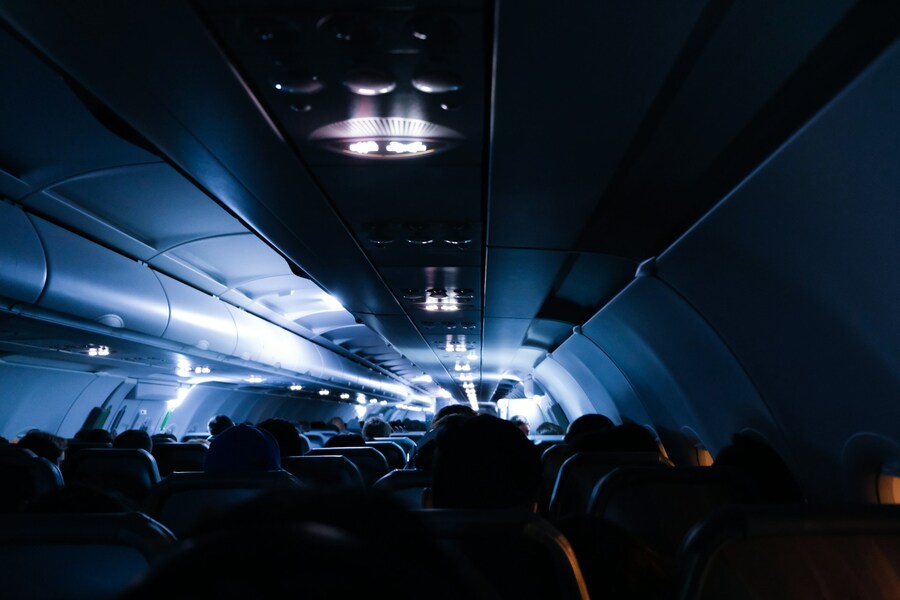
How Does Blue Upholstery Build Consumer Trust and Brand Loyalty?
 Source: Wenhao Ruan/Unsplash
The Psychological Shield: De-Escalating Flight Anxiety
For a significant portion of the global population, commercial flying triggers a physiological stress response. Clinical studies suggest that anywhere from 30% to 40% of travelers experience some degree of aviophobia or flight-induced apprehension. The claustrophobic reality of a pressurized aluminum tube, combined with background engine hums, unexpected turbulence, and a total loss of personal control, heightens nervous system activity long before the aircraft leaves the tarmac.
This is where color psychology enters the engineering equation. Decades of behavioral research demonstrate that visual stimuli directly influence autonomic nervous system responses. The human brain processes short-wavelength colors – specifically deep blues and cool grays – with a calming neurological reaction. Exposure to blue hues triggers the brain to release parasympathetic signals, gently lowering heart rates, reducing blood pressure, and mitigating rapid breathing.
Unlike energetic colors, such as red or orange, which stimulate the amygdala and heighten visual alertness, blue is universally associated with stability, serenity, and vast natural expanses like clear skies and calm oceans. Moreover, cross-cultural studies in sensory perception reveal that blue enjoys nearly universal positive associations across different global demographics. For international airlines carrying passengers from dozens of distinct cultural backgrounds on a single flight, blue serves as a visual language of tranquility that translates seamlessly across borders. By blanketing the seating area in soothing navy, cobalt, or slate tones, aircraft designers build an unconscious buffer against panic, helping flyers feel grounded during boarding and turbulent stretches of flight.
Sensory Illusions: How Color Controls Cabin Temperature Perception
Maintaining a comfortable physical environment inside a commercial jet is one of an airline flight crew's most complex operational tasks. Aircraft cabins are tightly packed with hundreds of passengers radiating body heat in an enclosed space. While climate control systems work continuously, physiological comfort is deeply tied to visual and psychological perception – a phenomenon known in environmental psychology as cross-modal sensory interaction.
Color psychologists and research teams at aircraft manufacturing giant Boeing have long analyzed how ambient cabin colors influence passenger perceptions of humidity, temperature, and aroma. Visual inputs can trick the brain into recalibrating physical sensations. Warm colors like red, orange, yellow, and deep brown make spaces feel physically warmer, heavier, and more enclosed. Conversely, cool colors like navy blue, teal, and slate gray create an optical illusion of spatial openness, breathability, and thermal coolness.
Studies indicate that individuals seated in blue-dominated environments perceive ambient temperatures to be several degrees cooler than those in red or yellow rooms, even when the actual thermostatic temperature is identical. By installing blue seat fabrics, airlines leverage this perceptual quirk to offset the potential stifling feeling of a fully packed cabin. This visual cooling effect reduces complaints about stuffy air, prevents thermal discomfort, and lowers the incidence of heat-induced nausea among sensitive passengers. When combined with individual overhead air vents, blue seating creates an ambient environment that feels fresh, airy, and physically refreshing.
The Hard Economics of Airline Maintenance: Hiding Wear, Spills, and Imperfections
While passenger psychology plays a vital role in color selection, practical economics and aircraft maintenance logistics provide an equally compelling argument for blue seating. Commercial airliners are high-intensity capital assets that only generate revenue while airborne. Turnaround times at airport gates are razor-thin, often ranging from 25 to 45 minutes for domestic routes. During these rapid turnarounds, cabin crews must clean hundreds of seats, clear trash, and prepare the plane for the next bank of travelers.
Despite routine cleaning, passenger cabins endure severe daily wear. Drinks spill during unexpected turbulence, greasy snacks drop onto cushion edges, pens leak in seatback pockets, and thousands of bodies rub against seat upholstery every single week. Light-colored fabrics – such as beige, cream, white, or light gray – would reveal every smudge, coffee stain, and ink mark almost immediately, creating an unhygienic appearance and requiring constant deep cleaning or costly upholstery replacements.
Dark blue upholstery provides an optimal balance between visual aesthetics and stain concealment. Dark navy and deep indigo shades absorb light, effectively masking minor discoloration, beverage spills, and fabric friction wear. In addition, dark blue doesn't show deep shadow lines caused by fabric creasing over time. By utilizing high-durability synthetic leathers, fire-retardant nylon, or heavy-duty wool-poly blends dyed in dark blue tones, airlines significantly extend the operational lifespan of seat covers. This maintenance strategy saves airlines millions of dollars annually in refurbishing costs – savings that help keep passenger ticket prices competitive across the industry.
Modern Cabin Architecture: Lighting Integration and Circadian Harmony
 Source: Tim Gouw/Unsplash
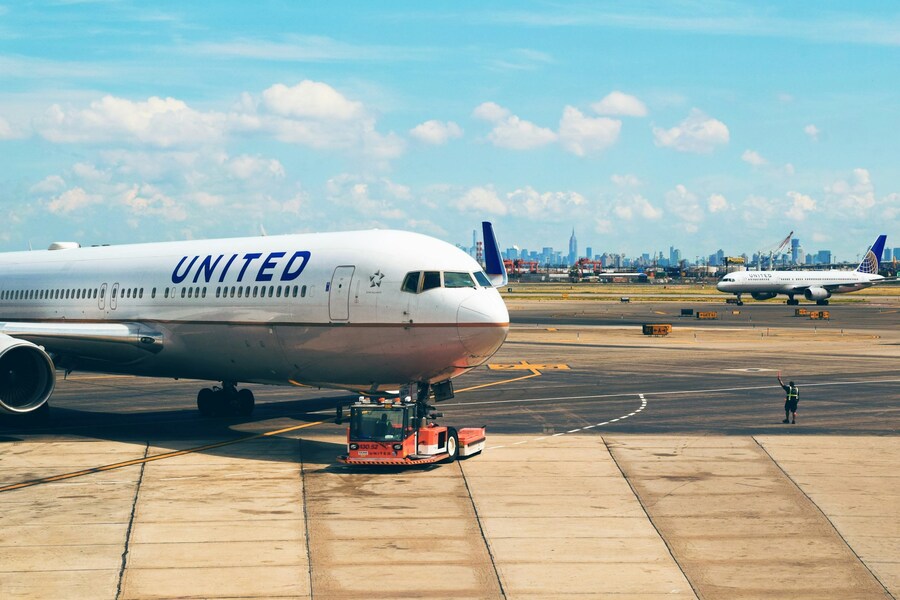
The evolution of commercial aircraft interiors underwent a massive technological leap with the introduction of customizable LED mood lighting systems. Modern airliners, such as the Boeing 787 Dreamliner and the Airbus A350, rely on dynamic LED lighting to transform the cabin environment throughout long-haul journeys. Flight crews use these systems to simulate natural sunrise and sunset sequences, gradually waking passengers or encouraging restful sleep to minimize jet lag.
Blue seat fabrics play an integral structural role in these modern lighting schemes. Color harmony requires that cabin surfaces interact predictably with variable light wavelengths. Blue seating absorbs and reflects cool white, violet, and soft blue LED light spectrums with exceptional visual cohesion. Under night-flight lighting setups, blue seats blend smoothly into the ambient shadows, minimizing visual clutter and creating a quiet, unified atmosphere that encourages rest.
If airplane seats were upholstered in clashing colors like bright green, yellow, or vivid red, the interaction with blue or purple anti-jet-lag light spectrums would create unpleasant visual distortions and muddy color tones. Blue seating ensures a consistent visual baseline under every lighting phase – from bright boarding lights to ambient mid-flight cabin dimming. This integration ensures that modern cabin architecture works as a unified system designed to protect passenger well-being and combat circadian disruption.
Brand Identity, Industry Standards, and the Psychology of Consumer Trust
Beyond environmental engineering and maintenance science, the ubiquitous blue airplane seat is a masterclass in corporate brand architecture. Blue is historically the most dominant color in corporate branding across banking, technology, healthcare, and aviation. Psychologically, blue conveys authority, dependability, safety, and operational precision – qualities that consumers prioritize when choosing an airline.
Major global carriers including United Airlines, Delta Air Lines, Southwest Airlines, JetBlue Airways, Air France, and KLM Royal Dutch Airlines have made various shades of blue central to their brand identity. When travelers compare flight schedules and decide to
Changing an established cabin aesthetic carries enormous financial risk and cost. Over decades of commercial aviation history, travelers have developed an instinctual association between blue airplane cabins and reliable travel. Deviating to unfamiliar seat colors can subconsciously alter passenger perceptions of cabin quality or safety. As a result, even as airlines introduce modern seat designs, premium ergonomic cushion foams, and upgraded inflight entertainment screens, they consistently retain blue as the visual anchor of their cabin strategy.
Practical Travel Logistics: Securing Stress-Free Journeys from Curb to Cabin
Understanding that airlines use blue seating to keep you calm inside the aircraft highlights a broader truth about modern travel: minimizing stress requires intentional planning at every stage of your journey. While cabin designers work hard to create a peaceful environment once you board, your overall flight experience begins hours before you ever step onto the plane. High cortisol levels triggered by traffic jams, expensive terminal garages, or frantically searching for a parking spot can ruin an otherwise smooth trip.
To ensure your journey starts on a calm note long before you sink into your blue airplane seat, managing ground logistics is essential. Reserving your parking spot in advance eliminates one of the biggest variables of airport travel. By comparing competitive rates for airport parking through our reservation system at AirportParking.deals, you eliminate pre-flight guesswork and secure guaranteed parking at off-site facilities near major airports nationwide.
Here's a practical checklist to streamline your travel workflow from home to your blue aircraft seat:
- Book Ground Logistics Early. Just as you lock in your flight tickets, secure off-airport parking weeks in advance to capture the lowest available rates and guarantee your space during peak travel seasons.
- Buffer Your Arrival Time. Aim to arrive at your off-site parking facility at least 2.5 hours before domestic departures and 3.5 hours before international flights. Our shuttle services offer swift transfers directly to your terminal.
- Organize Digital Documents. Keep your parking reservation confirmation, mobile boarding passes, and ID easily accessible on your smartphone to navigate check-in smoothly and efficiently.
- Prepare for Cabin Ergonomics. Once onboard your flight, optimize your blue seat setup by adjusting your air vent, utilizing a supportive neck pillow, and wearing noise-canceling headphones to reinforce the cabin's calming atmosphere.
By aligning smart pre-flight logistics with the intentional design of modern aircraft cabins, you transform air travel from a high-stress chore into an enjoyable, relaxed experience.
Ensuring a Peaceful Journey
 Source: Hermes Rivera/Unsplash
The dominance of blue aircraft seats is a fascinating blend of human psychology, thermal sensory perception, maintenance economics, and strategic branding. From lowering passenger heart rates and concealing daily cabin wear to harmonizing with modern LED lighting and instilling brand trust, the blue seat is a quiet workhorse of commercial aviation design.
At AirportParking.deals, we believe your travel experience should be peaceful from the moment you leave your driveway to the moment you land at your destination. By utilizing our reservation system, you can lock in affordable airport parking, save money, and enjoy guaranteed parking with seamless terminal shuttle transfers. Don't let airport parking stress derail your journey before it even starts. Visit our official website today, reserve your spot in seconds, and step onboard your next flight relaxed and ready to fly!


