

The travel industry is currently witnessing a fascinating shift in how passengers perceive time, distance, and the very nature of a "quick trip." For decades, the industry defined short-haul travel by a specific set of parameters: narrow-body aircraft, limited onboard services, and a flight duration that rarely exceeded three hours. However, as global air corridors become more congested and the efficiency of modern twin-engine jets increases, a new standard has quietly emerged. This transition has led to the rise of what experts now call the 5-Hour Rule. Under this new paradigm, the psychological and operational boundaries of short-haul travel have expanded, effectively moving the goalposts for what constitutes a "routine" flight. Travelers are now finding themselves on five-hour journeys that feel remarkably similar to the one-hour hops of the past, both in terms of frequency and passenger expectations.
This evolution isn't merely a matter of semantics; it represents a fundamental change in global logistics and consumer behavior. The 5-Hour Rule suggests that any flight under five hours is now treated with the same casual approach once reserved for domestic shuttles. Passengers are increasingly willing to board a four- or five-hour flight with minimal preparation, often viewing the time spent in the air as a minor transition rather than a significant event. This shift is driven by advancements in cabin technology, more streamlined airport processing, and a broader geographical reach of low-cost carriers. As we navigate this new landscape, understanding the mechanics of the 5-Hour Rule becomes essential for any savvy traveler looking to master the modern skies.
So, is the 5-hour flight the new benchmark for short-haul travel?
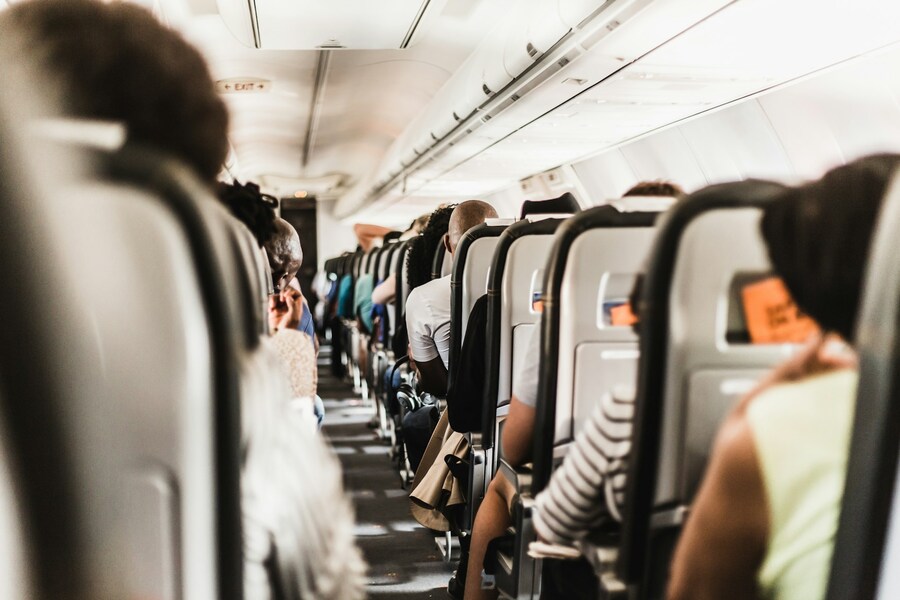
 Source: Mitchell Hollander/Unsplash
The traditional definition of a short-haul flight was often dictated by the limitations of older aircraft and the high costs of regional fuel consumption. In the past, a flight from New York to Miami or London to Rome was the quintessential short trip. Anything longer began to push into the territory of "medium-haul," bringing with it different aircraft types and a shift in the service model. Today, however, that distinction has blurred significantly. The introduction of ultra-efficient, long-range narrow-body aircraft has allowed airlines to operate five-hour routes with the same economic profiles as much shorter segments. From the passenger's perspective, the widespread availability of high-speed satellite Wi-Fi and power outlets at every seat has transformed a five-hour block of time from a potential vacuum into a productive or entertaining extension of their daily lives.
This trend is also reinforced by the expansion of "secondary" airport hubs. By utilizing airports that sit just outside major metropolitan centers, airlines can offer direct, five-hour flights to destinations that previously required a time-consuming layover. When you factor in the time saved by avoiding a connecting flight, a five-hour direct journey often feels shorter and less taxing than a three-hour journey with a stopover. Consequently, the 5-Hour Rule has become a tool for psychological management; by treating these mid-range distances as "short-haul," travelers reduce the mental friction associated with booking trips to more distant locales.
The technological evolution of the narrow-body cabin
One cannot discuss the rise of longer short-haul flights without acknowledging the massive leaps in cabin engineering. Modern narrow-body planes are no longer the cramped, noisy tubes of the late 20th century. Improved insulation, larger overhead bins, and advanced LED mood lighting – designed to reduce jet lag – have made staying in a single seat for five hours far more tolerable. Moreover, the ergonomics of slimline seats have been refined to maximize knee room, even in economy cabins. While the physical footprint remains relatively small, the "perceived space" has increased, making a journey from the East Coast of the United States to the Caribbean or deep into Central America feel like a breezy commute.
The role of "Agentic AI" in the travel experience also contributes to this feeling of ease. Automated systems now handle everything from dynamic rebooking to personalized meal preferences before a passenger even steps onto the jet bridge. When the logistical hurdles of a flight are smoothed out by invisible technology, the duration of the flight itself becomes less of a burden. Passengers can now spend a five-hour flight engaged in a virtual reality walkthrough of their hotel or catching up on a high-definition streaming series, effectively "shrinking" the time spent in the air.
Navigating the economics of modern airfare
The financial aspect of the 5-Hour Rule is perhaps its most compelling driver. Airlines have mastered the art of "Married Segment" logic and "Reverse Hub" strategies to keep these five-hour routes competitively priced. Frequently, a traveler will find that a five-hour flight to a burgeoning mid-tier city is significantly cheaper than a two-hour flight to a major, congested hub. This pricing inversion encourages travelers to look further afield, pushing the boundaries of what they consider a "weekend getaway."
However, this pricing model requires a different approach to booking. Savvy flyers are now looking at "Hidden City" opportunities and flexible date ranges to exploit the lower costs associated with these longer narrow-body routes. The key is to recognize that the airline's operational cost for a five-hour flight on a modern fuel-efficient jet isn't drastically higher than a shorter hop on an older, thirstier aircraft. This allows for a democratization of travel, where five hours of flying becomes an accessible standard for the average vacationer.
Source: Gerrie van der Walt/Unsplash
The psychological shift: redefining time in the air
Beyond the hardware and the economics lies a deep-seated change in how we perceive time. In an era where we are constantly connected, five hours is often seen as a rare "focus block." For the business traveler, it's an opportunity to clear an inbox without the interruptions of ground-based life. For the leisure traveler, it's two full-length movies and a meal. By the time the descent begins, the passenger has successfully transitioned from their origin to a vastly different climate or culture, yet the mental fatigue remains low because the experience mimicked the simplicity of a short-haul flight.
This psychological reframing is essential for modern mobility. As urban centers expand and people move further away from traditional hubs, the willingness to accept a five-hour flight as a "standard" duration opens up a much larger radius of travel. It turns a "big trip" into a "regular trip," which in turn fuels the growth of regional tourism and international business exchanges. The 5-Hour Rule isn't just about the clock; it's about the erosion of the distance barrier.
Maximizing comfort on the extended short-haul
To truly benefit from this shift, travelers must adapt their on-the-go habits. Even though these flights are now treated as short-haul, five hours is still enough time for the body to feel the effects of dehydration and cabin pressure. The most effective air travel hacks involve a "hybrid" approach: treating the logistics with the speed of a short-haul flight but treating the body with the care of a long-haul journey. This includes staying hydrated, utilizing noise-canceling technology to protect against "sonic fatigue," and choosing seats that offer the best balance of exit-row legroom and proximity to the front of the cabin for a quick egress.
Biometric boarding and digital identity systems have also played a role in reducing the "total travel time" perception. When the time spent in the airport terminal is cut down through automated security and facial recognition, the five hours spent on the plane doesn't feel like such a large percentage of the day. The journey is no longer an ordeal of queues followed by a flight; it's a streamlined process where the flight is the primary, and most comfortable, component.
The role of ground logistics in the total experience
While the time in the air is being redefined, the total door-to-door experience remains heavily influenced by what happens before the wheels leave the tarmac. A major friction point for the 5-hour traveler is often the transition from the car to the terminal. As more people embrace these longer "short-haul" trips, the demand for reliable, cost-effective infrastructure at regional airports has surged. Travelers are looking for ways to minimize the stress of the "first mile" of their journey, ensuring that the time saved by a direct, efficient flight isn't lost in a crowded parking garage or a long shuttle ride.
For those flying out of Florida's southwestern corridors, managing the start of the trip is particularly vital. Many travelers are discovering that opting for RSW Airport parking through dedicated reservation platforms can significantly enhance the overall travel experience. By securing RSW parking deals in advance, passengers can bypass the uncertainty of terminal lots and head straight to their gate with time to spare. This kind of logistical foresight perfectly complements the 5-Hour Rule, as it ensures the entire journey – not just the flight – is handled with maximum efficiency and minimal mental overhead. Taking the time to coordinate ground transportation through a smart booking platform allows the traveler to maintain that "short-haul" mindset from the moment they leave their driveway.
Conclusion

Source: Mi Pham/Unsplash
The 5-Hour Rule is a testament to the incredible efficiency of the modern aviation ecosystem. By expanding our definition of short-haul travel, we've effectively opened up the world, making distant cities and remote landscapes feel like they are just around the corner. This shift is supported by a trifecta of better aircraft, smarter digital tools, and a change in passenger expectations. We no longer need to dread a five-hour journey; instead, we can embrace it as a productive, comfortable, and affordable way to traverse the globe.
As we look toward the future of mobility, the lines between different types of travel will likely continue to blur. The most successful travelers will be those who recognize these shifts and adapt their strategies accordingly – leveraging technology to book smarter, using ground logistics to save time, and reframing their perception of distance. Whether you are traveling for business or heading out on a new adventure, remember that the clock is no longer the enemy. With the right mindset and the right tools, a five-hour flight is simply the new standard for a quick and easy getaway.


