

The Olympic flame has finally been extinguished across Milan and Cortina d'Ampezzo, leaving behind a unique economic phenomenon: the "Olympic Hangover." While the Games saw hotel rates surge by 140% and flight availability vanish, the post-event reality is defined by a sharp drop in demand, empty rooms, and aggressively discounted airfares. This transition creates a prime window for savvy travelers to utilize the region's newly upgraded infrastructure – from high-speed rail links to expanded airport facilities – without the premium price tag. By understanding how airlines recalibrate their algorithms after a mega-event, you can navigate this "demand vacuum" to experience northern Italy's luxury at a fraction of the previous cost. It's the ultimate sweet spot for proactive flyers seeking high-value European exploration. So, let's get to it!
So, how can you capitalize on the post-Olympic price drop?
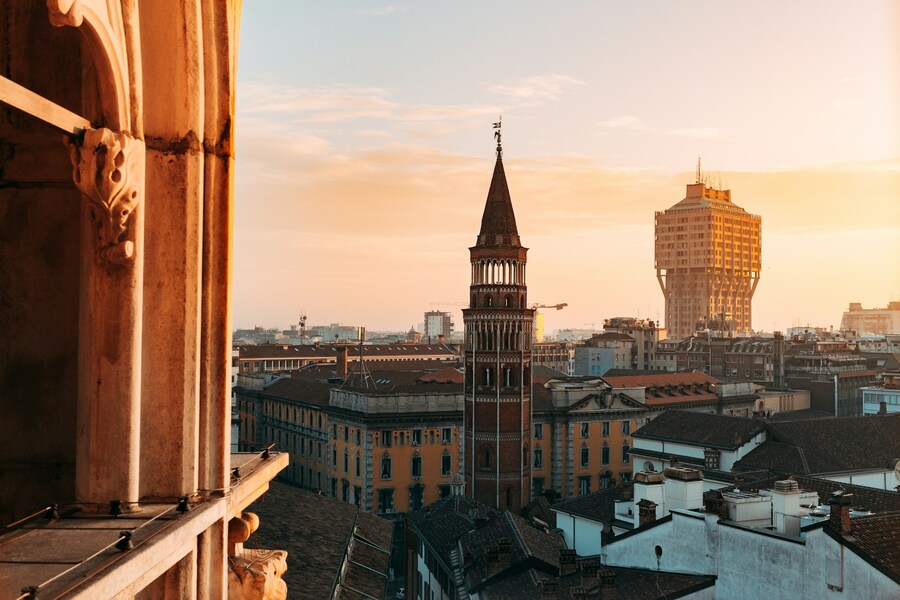 Source: Matteo Raimondi/Unsplash
The post-Games "demand vacuum" forces airlines to slash prices on excess seating. To maintain load factors, carriers discount previously high-profit routes, creating massive savings across Milan and its connecting European hubs.
The art of timing and the "dead zone" strategy
One of the most effective air travel hacks for this specific period is identifying the "dead zone." This is the two-to-four-week window following a major international event where corporate travel hasn't yet filled the void left by departing tourists. During this time, the algorithms governing flight prices tend to be more volatile, frequently dropping "mistake" fares or deeply discounted promotional rates to lure travelers back to the region.
To catch these, you should prioritize flexible date searches. Standard booking engines often hide the best deals within a three-day window of your intended departure. By using tools that visualize price trends over a whole month, you can see exactly when the "hangover" hits its lowest point. Often, flying on a Tuesday or Wednesday in the fortnight following the Closing Ceremony can result in savings of up to 40% compared to weekend travel. Moreover, since the infrastructure in Milan has been modernized to handle massive crowds, your transit through Malpensa (MXP) or Linate (LIN) will be smoother and faster than it has been in years, providing a premium experience for a budget price.
Leveraging the new rail-air integration
A significant legacy of the recent Games is the improved connectivity between the airports and the alpine regions. France and Italy have been leading the charge in "air-rail" integration, where short-haul domestic flights are increasingly replaced by high-speed trains. For a traveler in the post-Olympic period, this is a major win. Instead of booking an expensive connecting flight into a smaller regional airport, you can fly into a major hub like Milan or even Venice and take advantage of the newly subsidized, high-speed rail links.
Many airlines now offer integrated tickets that include your train journey as a flight segment. This not only saves money but also offers protection: if your flight is delayed and you miss your train, the airline is often responsible for rebooking you, just as they would for a connecting flight. This "train-as-a-connection" hack is particularly useful in northern Italy, where the trek from Milan to the Dolomites has been slashed in time thanks to Olympic-driven infrastructure spending.
Decoding the algorithm: when to pull the trigger
A common misconception in 2026 is that booking as early as possible always yields the lowest price. In reality, for a post-event period, the "booking curve" looks a bit different. Airlines often hold onto higher prices for longer, hoping for a secondary wave of "legacy" tourism. However, as the departure date approaches and seats remain unassigned, the prices begin to tumble.
The trick is to set highly specific price alerts. Instead of just tracking a route, track specific fare classes. Many travelers don't realize that "Basic Economy" and "Economy" are often priced similarly during a slump, but the latter includes a carry-on or seat selection. By monitoring the price gap between these classes, you can often "hack" your way into a more comfortable experience for a negligible price difference. If you see the price of a standard economy seat drop to within $30 of the basic fare, that's usually the signal that the airline is desperate to fill the cabin, and prices are unlikely to go much lower.
Maximizing loyalty programs in a high-inventory environment
When demand is low, award seat availability skyrockets. During the Games, finding a "Saver" level award seat to Milan was nearly impossible. Now, as the "hangover" sets in, airlines often open up a significant amount of "Partner" availability to fill planes. This is the perfect time to burn through those accumulated miles.
Check for "open-jaw" itineraries – flying into Milan and out of another city like Munich or Zurich. Since the Olympic infrastructure has improved regional transit, moving between these European hubs is easier than ever. Often, an award flight back from a non-Olympic city will be cheaper in points than a round-trip to the same hub, allowing you to see more of the continent while dodging the remnants of high-season pricing.
Avoiding the "hidden" costs of modern travel
While the airfare itself might be crashing, airlines are increasingly reliant on ancillary fees to make up their margins. The 100ml liquid rule remains a point of confusion across European hubs, and baggage fees have become more aggressive. To truly "hack" your travel, you must master the art of the "personal item." Many savvy travelers now use specialized compression bags that allow a week's worth of clothing to fit inside a backpack that slides under the seat.
In addition, be aware of the new digital entry systems. With the full implementation of the

Source: Kazuo ota/Unsplash
The strategic value of regional hubs
While Milan is the obvious choice, don't overlook "shadow" airports. Airports like Orio al Serio (BGY) in Bergamo or even Verona (VRN) often see a secondary price crash as budget carriers like Ryanair and EasyJet re-adjust their schedules. These airports were heavily utilized for Olympic logistics and now have high-capacity shuttle services and renovated terminals. Flying into a secondary hub and taking a short, scenic bus or train ride into Milan can often save you an additional $100 or more, which can then be spent on a world-class dinner in the Galleria Vittorio Emanuele II.
The importance of the departure experience
Before you even reach the Italian mountains, your travel hack strategy should begin at your home airport. Many travelers focus so intently on the destination that they overspend on the logistics of leaving. For example, if you are flying out of the Southeast United States to catch a connection to Europe, you might find yourself departing from Birmingham. Managing your pre-flight costs is essential for keeping your total trip budget under control. Specifically, finding reliable BHM Airport parking can save you a significant amount compared to standard terminal rates. By securing your spot in advance through dedicated booking platforms, you can often find discounts that turn a $20-a-day expense into a much more manageable $5 or $7. This ensures that the money you "hacked" off your international airfare doesn't simply disappear into a parking garage before you've even cleared security.
Navigating the "new normal" of airport security
As you move through major hubs, keep in mind that the technology at security checkpoints is evolving. Some airports have installed advanced CT scanners that allow you to keep electronics and liquids in your bag, while others still require the old "bins out" method. The "hack" for 2026 is to dress for the most restrictive environment. Wear slip-on shoes, avoid belts with metal buckles, and keep your "3-1-1" bag easily accessible.
Moreover, airport lounges have become more accessible through various credit card partnerships and independent memberships. In a post-Olympic period, these lounges are far less crowded. If you have a long layover in a hub like New York, London, or Paris on your way to Italy, paying for a day pass or using a membership can provide a quiet space to work or rest, along with free food and drinks that would otherwise cost a premium in the terminal.
The role of AI in post-Olympic travel planning
In the current year, AI-driven travel assistants have become remarkably adept at spotting trends that humans might miss. Use these tools to monitor not just the price of the flight, but the "value score." A flight that's $50 cheaper but includes a 12-hour layover and no checked bag is often a worse deal than a slightly more expensive direct flight.
AI can also help you navigate the complex web of "hidden city" ticketing – a practice where you book a flight with a layover in your actual destination and simply walk out of the airport. While airlines frown upon this, and it requires you to travel with only a carry-on, it remains a powerful "hack" for reaching high-demand cities during transitional periods. However, always ensure you understand the risks, such as the cancellation of the remainder of your itinerary.
Why the "hangover" is your best friend
Ultimately, the Milan-Cortina price crash is a testament to the cyclical nature of global tourism. The infrastructure built for the Games – the faster trains, the renovated terminals, the increased digital efficiency – was never meant just for the athletes; it was meant for the legacy. By choosing to travel now, you are benefiting from billions of dollars in investment without having to pay the "Olympic premium."
The mountains are still there, the snow is often better in the late season, and the Aperol Spritz tastes just as good without the crowd of 10,000 people standing between you and the bar. The "hangover" isn't a negative; it's a clearing of the air that allows the true beauty of northern Italy to shine through at a price point that makes sense for the modern, budget-conscious explorer.
The bottom line

Source: Tirza van Dijk/Unsplash
The window for the "Olympics Hangover" in Milan and Cortina is a fleeting but golden opportunity. Air travel in 2026 has become a game of data and timing, where the winners are those who can look past the headlines and see the underlying market shifts. By combining strategic flight booking, leveraging new rail integrations, and managing "home-base" costs like airport parking, you can construct a luxury itinerary on a modest budget. The prices are crashing, the crowds are thinning, and the modernized gateway to the Alps is wide open. All that's left is for you to book the ticket and see the legacy for yourself!


