

The golden age of air travel used to be defined by what the airline provided for you. There was a time when the novelty of a tiny, flickering screen embedded in the headrest in front of you felt like the height of luxury. It signaled that you were finally embarking on a journey where your only responsibility was to sit back, consume mediocre pasta, and watch a movie that had been out of theaters for six months. However, the landscape of aviation has shifted dramatically. As we move deeper into an era of hyper-connectivity and personal customization, that tethered seatback monitor is increasingly becoming a relic of the past – a bulky, low-resolution vestige of a time before we all carried supercomputers in our pockets.
Modern travelers are reclaiming their autonomy. We are no longer beholden to the curated, often censored, and frequently buggy entertainment systems provided by carriers. The shift toward
So, why is personal technology outpacing traditional in-flight entertainment?
 Source: Annie Spratt/Unsplash
The fundamental issue with seatback entertainment systems is their lifecycle. Aircraft are massive investments that stay in service for decades. While an airline might refresh its cabin interior every 7 to 10 years, consumer electronics evolve on a cycle of 12 to 24 months. This creates a permanent technological lag. By the time a new seatback system is certified for flight safety and installed across a fleet, its processor is already struggling to keep up with modern bitrates, and its touch-sensitivity feels prehistoric compared to the fluid glass of a high-end tablet or smartphone.
Moreover, the hardware itself is a liability for the airline and a frustration for the passenger. These units add significant weight to the aircraft, increasing fuel consumption and carbon emissions. From a passenger perspective, the "phantom touch" of a neighbor tapping aggressively on the screen behind your head is a notorious disruptor of sleep. By transitioning to a personal device model, airlines can shed weight, and passengers can enjoy a vibration-free rest. The shift also addresses a growing concern regarding cabin hygiene; touchscreens are notorious magnets for germs, and while crews do their best to sanitize, your personal device is a closed ecosystem that only you handle.
The superiority of personal hardware and display quality
When you compare the liquid crystal displays of a modern tablet or a high-end laptop to the matte, often scratched surfaces of an airplane monitor, the difference is staggering. Most seatback screens struggle with glare and poor viewing angles. If the person in front of you reclines their seat, you are often forced to adjust your own posture just to see the bottom half of the frame. In contrast, a personal device equipped with an OLED or high-resolution LED screen provides deep blacks, vibrant colors, and a level of sharpness that makes cinematic immersion actually possible at 35,000 feet.
Moreover, the audio experience is where personal tech truly shines. Most seatback systems still rely on the archaic dual-prong 3.5mm jack, requiring flimsy airline-provided earbuds or a clunky adapter for your own headphones. Even when they do support Bluetooth, the pairing process can be a nightmare of interference and lag. By using your own device, you maintain a direct, high-fidelity connection to your noise-canceling headphones. This allows for a spatial audio experience that can effectively drown out the hum of the engines and the chatter of the cabin, creating a private sanctuary in a public space.
Content freedom and the end of censorship
One of the most overlooked drawbacks of airline-provided entertainment is the "edited for content" factor. Airlines often serve a global audience and must adhere to various cultural and age-appropriateness standards, leading to versions of films that are stripped of their artistic integrity. When you bring your own content, you are the programmer. Whether you want to binge-watch an obscure documentary series, catch up on R-rated prestige dramas, or follow a niche YouTube creator's latest travel vlog, your library is limited only by your storage space.
Pre-downloading content also bypasses the common frustration of a system crash. We have all experienced that moment halfway through a flight when the entire IFE (In-Flight Entertainment) system needs a hard reboot, leaving the cabin in digital darkness for 20 minutes. With your own device, your entertainment is offline and independent. You aren't reliant on the plane's local server or a spotty satellite connection to finish the climax of a movie. This reliability is the cornerstone of a low-stress travel strategy.
Maximizing productivity and personal workflow
For many, a long-haul flight isn't just a time for movies; it's a rare window of uninterrupted focus. Seatback screens are purely passive devices. They don't allow you to toggle between a spreadsheet and a podcast or to edit photos from your trip while listening to a curated playlist. By opting for a laptop or a powerful tablet, you turn your tray table into a mobile office or a creative studio.
The ergonomics of using your own device have also improved with the advent of clever mounting solutions. Modern travel accessories, such as flexible silicone mounts or "travel flies" that clip onto the tray table latch, allow you to position your screen at eye level. This prevents the dreaded "tech neck" associated with hunching over a low-mounted seatback screen or holding a phone in your hand for hours. By controlling the height and angle of your display, you arrive at your destination with less physical fatigue.
Battery management and the power struggle
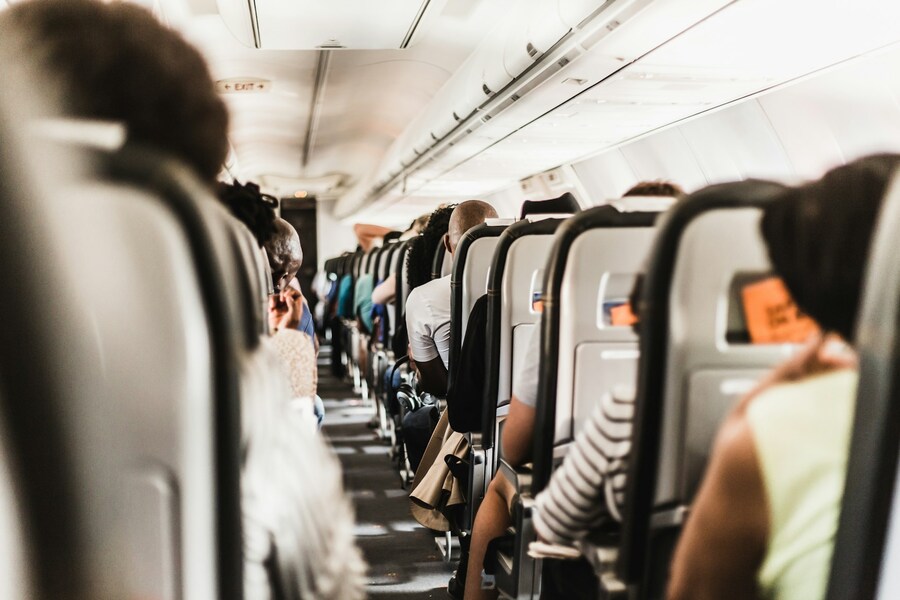
A valid concern for the BYOD traveler has traditionally been battery life. However, the aviation industry has responded to the shift in passenger behavior by prioritizing power access over embedded screens. Most modern narrow-body and wide-body aircraft are now equipped with high-output USB-C ports and universal AC power outlets at every seat. This effectively removes the "range anxiety" of using your own device.
To be a truly savvy traveler, you should never rely solely on the plane's power supply, as outlets can occasionally be faulty. Carrying a compact, high-capacity power bank (ensuring it meets TSA and FAA Watt-hour limits) provides a secondary layer of security. This ensures that even if you spend the entire 10-hour flight gaming or editing video, you'll land with a fully charged phone ready for navigation and ride-sharing apps. It's a holistic approach to travel tech that prioritizes readiness over convenience.
The strategy of pre-flight curation
The secret to a successful "skip the screen" flight lies in the preparation 24 hours before departure. This involves more than just downloading a few movies. It's about creating a digital environment that mirrors your mood and needs. You should consider downloading offline maps of your destination, language learning modules, and a variety of media types – including long-form articles, e-books, and offline-accessible games.
Many streaming services now offer "smart downloads" that automatically grab the next few episodes of a series you're watching. Utilizing these features ensures you aren't stuck with a single movie you realize you don't actually like 30 minutes into the flight. Variety is the antidote to cabin fever. By diversifying your offline library, you can pivot from high-energy gaming to low-stimulation reading as your energy levels fluctuate during the journey.
Navigating the airport experience before takeoff
While much of the focus is on the time spent in the air, the logistics of reaching the gate can often be the most taxing part of the trip. Experienced fliers know that a smooth flight starts long before you reach the security line. This includes managing your transit to the terminal. For those flying out of major hubs, the convenience of driving yourself can be marred by the stress of finding a spot. High-traffic locations often see their primary garages fill up quickly, leading to frantic last-minute searches.
Planning your departure carefully can save both time and money. For instance, if you are departing from a massive international hub in Texas, looking into IAH parking deals is a smart way to secure a spot in advance. Opting for reputable IAH Airport parking services through dedicated booking platforms allows you to compare rates between on-site and off-site lots, often revealing significant savings and shuttle options that drop you right at the terminal. Streamlining this phase of the journey ensures you arrive at your seat with your devices charged and your mind focused on the relaxation ahead, rather than dwelling on the cost of your car's stay.
Connectivity and the future of in-flight Wi-Fi
The argument for skipping the seatback screen is further bolstered by the rapid improvement in in-flight Wi-Fi. We are moving away from the days of "pay-per-megabyte" pricing toward flat-fee or even free, ad-supported high-speed internet. With LEO (low Earth orbit) satellite constellations becoming the standard for aviation connectivity, the bandwidth available to passengers is beginning to rival home connections.
This connectivity allows you to stay in touch with the world, stream live sports, or even join a video call if absolutely necessary. While the seatback screen is a closed loop, your device is an open window. This allows for a much more dynamic flight experience where you aren't isolated from your digital life. You can check into your hotel, message your pick-up contact, or research your first meal in the city while you're still cruising at 30,000 feet.
The bottom line
Ultimately, the choice to skip the seatback TV is a choice to prioritize quality and personal comfort over the generic offerings of an airline. The built-in systems, while once revolutionary, are increasingly unable to compete with the vivid displays, superior audio, and personalized content libraries we carry with us every day. By taking control of your entertainment ecosystem, you eliminate the frustrations of unresponsive touchscreens, censored media, and uncomfortable viewing angles.
Embracing the BYO-screen philosophy requires a small amount of foresight – charging your devices, downloading your favorites, and perhaps snagging a clever mounting accessory – but the payoff is a significantly more refined travel experience. You transform a period of transit into a curated session of relaxation or productivity. As aircraft cabins continue to evolve, the most valuable real estate isn't the screen in the seatback; it's the empty tray table waiting for your own superior technology.


