

The roar of jet engines and the smell of freshly brewed terminal coffee are the hallmarks of modern travel, yet for many, the journey begins with a distinctive brand of stress. It's a tension that builds the moment you step into the boarding queue, watching the passengers ahead of you struggle with oversized rollers. This phenomenon, colloquially known as overhead bin anxiety, has become a defining characteristic of the flying experience. As airlines have increased baggage fees for checked luggage, more travelers have shifted their entire wardrobes into carry-on bags, leading to a high-stakes game of Tetris at thirty thousand feet. Finding a spot for your bag is no longer a given; it's a victory.
Fortunately, the aerospace industry has been working on a technological and behavioral solution to this friction. The shift toward modern cabin architectures has introduced a revolutionary concept designed to maximize space and minimize the boarding scuffle. This travel guide explores the intricacies of these new systems, the psychology of packing, and the practical hacks that ensure you never have to gate-check your precious belongings again.
So, how can new aircraft designs eliminate your overhead bin anxiety?
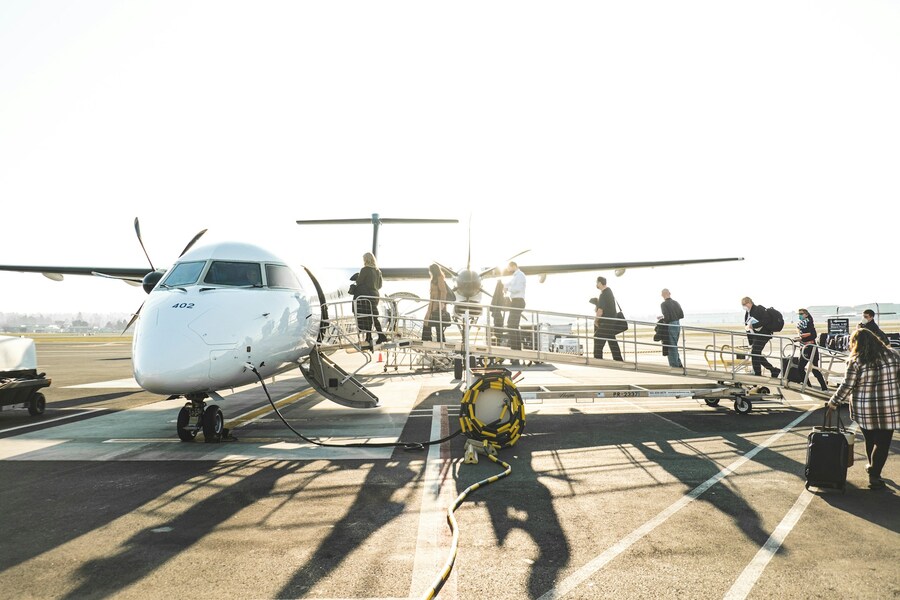
 Source: Uday Mittal/Unsplash
The primary source of frustration during boarding is the physical limitation of the traditional overhead bin. Historically, these compartments were designed to hold bags lying flat on their backs. This "horizontal loading" method is inherently inefficient because it leaves a significant amount of vertical dead space while quickly exhausting the horizontal width of the bin. When a bin is full in a traditional configuration, it usually only holds three or four standard rollaboard bags. However, the introduction of "vertical loading" bins – often referred to as "space bins" or "XL bins" by major manufacturers – changes the geometry of the cabin entirely.
The mechanics of vertical loading
In a vertical loading system, the bins are deeper and contoured differently. Instead of laying your suitcase flat like a book on a table, you turn it on its side, akin to placing a book on a shelf. This simple rotation allows the bin to accommodate significantly more bags. In many modern narrow-body aircraft, this shift increases carry-on capacity by up to 60%. This means that on a flight with a full manifest, every single passenger theoretically has a dedicated spot for a standard-sized rollaboard. The anxiety of being in the last boarding group starts to dissipate when the physical volume of the plane finally matches the needs of its occupants.
Understanding the mechanics of these bins is essential for a smooth boarding process. When you approach a vertical bin, you should look for the illustrative decals usually placed on the interior wall. These diagrams show the bag standing on its side. If you attempt to lay it flat in one of these deeper bins, you are essentially wasting space that could have held two additional bags. Being the traveler who knows how to "clock" the bag correctly not only saves time but also earns the silent gratitude of your fellow passengers and the flight crew.
Strategies for the modern carry-on traveler
While the hardware of the plane is improving, the software – your packing strategy – must also adapt. To truly master the art of air travel, one must think about the dimensions of their luggage in relation to these new bin standards. Most vertical bins are optimized for bags that follow the standard domestic and international size constraints. If your bag is "expanded" to its maximum depth using the perimeter zipper, it may become too thick to slide into a vertical slot, forcing you back into the inefficient horizontal position.
Packing cubes have transitioned from a niche travel accessory to an absolute necessity. By compressing your clothing, you ensure that your bag maintains a slim profile. This prevents the "bulging suitcase" syndrome that often leads to bags getting stuck or being rejected by flight attendants. Moreover, choosing a hard-shell spinner versus a soft-sided bag can make a difference in these new bins. Hard-shell bags provide a consistent shape that slides easily against the smooth composite materials of modern bins, whereas fabric bags can sometimes catch or snag on the latching mechanisms.
Mastering the boarding process
Even with better bins, the boarding process remains a choreographed dance. To minimize stress, your preparation should begin at the gate. Consolidate your items before your group is called. If you have a small "personal item" like a laptop bag or a purse, resist the urge to put it in the overhead bin initially. These bins are designed for the heavy hitters – the wheeled suitcases. Placing a small, squishy bag in a bin meant for vertical rollers is a breach of "bin etiquette" and contributes to the very congestion everyone is trying to avoid.
Once you reach your row, act with efficiency. Place your rollaboard in the bin according to the vertical orientation, then step into your row to allow others to pass. The "aisle block" is the number one cause of boarding delays. By clearing the path quickly, you contribute to an on-time departure. Remember, the flight cannot leave until everyone is seated and the bins are closed. Your individual speed directly impacts the collective arrival time.
Source: Jo Heubeck & Domi Pfenninger/Unsplash
The evolution of in-flight comfort
The benefits of vertical loading extend beyond just bag space. Because these bins are designed to be more capacious, they often feature lower "lips," making it easier for shorter travelers to lift their bags into place without straining. Some newer designs also incorporate integrated LED lighting that changes color to indicate if a bin is full or has space, allowing you to scan the cabin from a distance rather than opening every door. This visual communication reduces the "cabin wander" where passengers walk backward against the flow of traffic searching for a spot.
Moreover, these improvements in storage have allowed airlines to reconsider the overall aesthetic of the cabin. Modern interiors feel more open and airy because the bins are tucked higher into the ceiling architecture when closed. This creates a sense of spaciousness that combats the claustrophobia often associated with long-haul travel. When you aren't worried about your bag being crushed or sent to the cargo hold, you can actually enjoy the ambient lighting and ergonomic seating that modern aviation has to offer.
Navigation and ground logistics
The journey, of course, doesn't begin at the boarding gate; it begins the moment you leave your home. Efficiency in the air is mirrored by efficiency on the ground. Just as you optimize your bag for the overhead bin, you should optimize your arrival at the terminal. Long security lines and unpredictable traffic can spike your cortisol levels before you even see an airplane. Utilizing digital boarding passes and
For those flying out of major hubs, the logistics of getting to the terminal can be the most variable part of the day. If you are departing from a massive complex like Dallas/Fort Worth (DFW), the sheer scale of the operation requires a plan. Secure and reliable DFW Airport parking is a cornerstone of a stress-free departure. By looking into various DFW parking deals ahead of time, you can find options that offer shuttle services directly to your specific terminal. This ensures that you arrive at the gate with plenty of time to claim your overhead bin space, rather than rushing through the terminal as the final boarding call echoes over the speakers.
The psychology of the prepared traveler
Ultimately, overcoming overhead bin anxiety is a mental game as much as a physical one. It's about moving from a mindset of scarcity to a mindset of preparation. When you know your bag fits the vertical requirements, when you have organized your gear with precision, and when you have handled your ground transportation and parking with foresight, the chaos of the airport becomes background noise. You become the calm traveler who moves through the terminal with purpose, unaffected by the frantic energy of the unprepared.
As the industry continues to phase out older aircraft and retrofit existing fleets with these high-capacity bins, the "bin wars" will eventually become a relic of the past. Until then, being the most informed person on the plane is your best defense. Look for the "winglets" on the plane's exterior or the specific model numbers during booking – Boeing 737 MAX and Airbus A321neo aircraft are the primary carriers of these advanced bin systems. Knowing what equipment you are flying on allows you to predict your storage success before you even pack your first shirt.
The bottom line

The transition to vertical loading overhead bins represents a rare "win-win" in the world of commercial aviation. For the airlines, it means faster boarding times and fewer delayed flights. For the passenger, it means the end of the dreaded gate-check and a significant reduction in the stress of boarding. By understanding the geometry of these new spaces and adapting your packing habits to fit a vertical world, you can reclaim the joy of flight.
The next time you step onto a plane, look up. If you see those deep, contoured bins, remember to turn your bag on its side. It's a small gesture, but it represents a smarter way to travel – one where technology and human behavior align to make the journey as seamless as the destination. From finding the best parking rates to mastering the "vertical flip" in the cabin, every hack you employ is a step toward a more sophisticated and relaxed travel experience. Safe travels, and may your bin always have room for one more!


