

For decades, the experience of connecting to the internet while soaring over the ocean was characterized by frustration. Travelers were often met with exorbitant fees for a connection that barely allowed for a basic text message, let alone the ability to load a high-definition video or participate in a fast-paced gaming session. The technology relied on geostationary satellites positioned thousands of miles away, resulting in high latency and limited bandwidth that felt more like the dial-up era than the modern digital age. However, the landscape of aviation has undergone a radical transformation. The entry of
Today, the "airplane mode" mentality is shifting from a state of disconnection to a state of high-speed productivity and entertainment. Passengers no longer have to choose between a nap and a pixelated email thread. Instead, they are stepping onto aircraft equipped with hardware capable of delivering "at-home" speeds at 35,000 feet. This shift isn't just about checking social media; it's about the democratization of premium connectivity. With several major global carriers now offering Starlink-powered Wi-Fi for free, the dream of lag-free gaming and 4K streaming during a transoceanic flight has finally become a reality.
So, which airlines are leading the Starlink revolution in the sky?
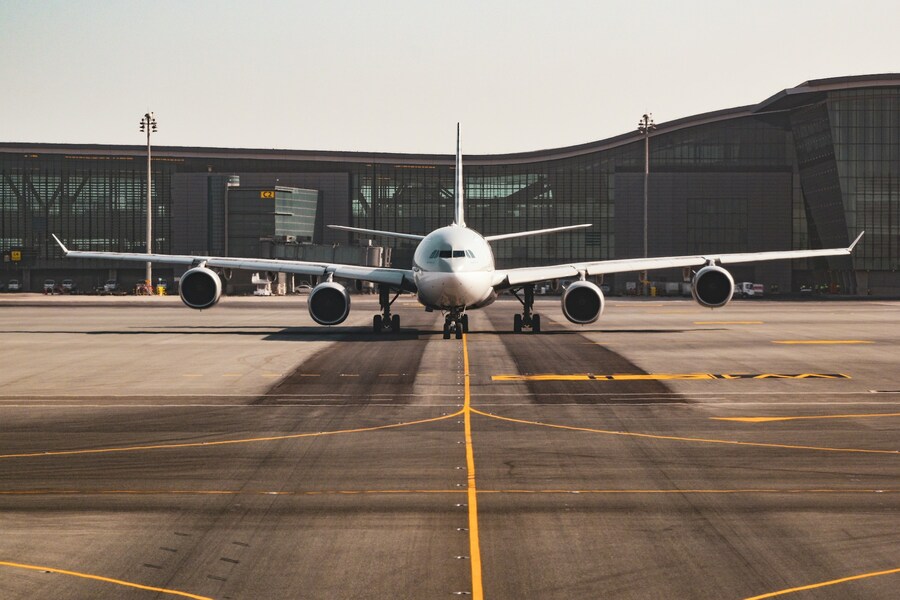
 Source: Brett Jordan/Unsplash
The competitive pressure to offer seamless connectivity has sparked an arms race among airlines. While some carriers still cling to legacy paid models, a group of forward-thinking giants has embraced Starlink to offer high-speed internet as a complimentary amenity. This transition is largely driven by the technological superiority of LEO satellites, which orbit significantly closer to the Earth than traditional satellites. This proximity reduces latency to under 30 milliseconds, a threshold that allows for real-time applications like First-Person Shooter (FPS) games, live sports broadcasting, and seamless video conferencing.
This performance gap has narrowed even further as the newest third-generation satellites enter the constellation, providing a massive 10-fold increase in downlink capacity compared to earlier designs. These advancements ensure that even on fully booked wide-body jets, every passenger can access dedicated bandwidth exceeding 200 Mbps without the frustrating "bottleneck" effects of the past.
The pioneers of the pacific and beyond
Hawaiian Airlines was a notable early adopter, setting a high bar for the rest of the industry. By outfitting its entire Airbus A321neo and A330 fleets with Starlink terminals, the carrier managed to offer free, high-speed access to every passenger regardless of their cabin class. This was particularly impactful for long-haul routes between the mainland United States and the Hawaiian Islands, where reliable connectivity was historically difficult to maintain over vast stretches of the Pacific Ocean. Their successful implementation proved that the hardware could handle the harsh conditions of transoceanic flight while maintaining speeds fast enough for everyone on board to stream simultaneously.
Following this lead, Qatar Airways has emerged as a global leader in the widebody sector. The airline has rapidly equipped its fleet, including the Airbus A350 and Boeing 777, with Starlink technology. In fact, Qatar Airways recently achieved a milestone by becoming the first carrier to certify and install the system on the Boeing 787-8. With speeds reaching up to 500 Mbps, passengers on ultra-long-haul flights from Doha to Los Angeles or Sydney can now enjoy a digital experience that often surpasses what they have in their own living rooms. This "gate-to-gate" connectivity ensures that the service remains active from the moment you take your seat until you arrive at your destination.
The North American expansion
In the United States, the scale of the Starlink rollout is unprecedented. United Airlines has made headlines with its massive commitment to retrofitting over 1,000 aircraft. Their strategy involves a phased approach, initially focusing on the two-cabin regional fleet before moving into the mainline Boeing and Airbus jets. United's goal is to provide free Starlink Wi-Fi to all MileagePlus members, turning the loyalty program into a key for high-speed access. This move has pushed competitors to accelerate their own timelines, as the expectation for "free and fast" becomes the new industry standard.
Alaska Airlines and Southwest Airlines have also joined the fray. Southwest, known for its historically no-frills approach, has recognized that connectivity is a "must-have" for the modern traveler. By integrating Starlink into its massive all-Boeing 737 fleet, Southwest is aiming to capture a larger share of the business travel market. The airline is currently in the process of outfitting hundreds of planes, with a focus on providing the bandwidth necessary for live gaming and HD streaming, features that were previously unthinkable on a low-cost carrier.
Global carriers and the future of in-flight tech

The trend isn't limited to North America and the Middle East. Air New Zealand has been a vocal proponent of the technology, trialing Starlink on its domestic routes with plans to expand. Their focus includes not just large jets but also smaller regional aircraft like the ATR turboprop, a world-first for this type of connectivity. Meanwhile, in Europe, airBaltic has committed to a fleet-wide installation, ensuring that even on shorter hops across the continent, passengers can stay productive without paying for "value-added" data packages.
The technological shift is also enabling airlines to improve their own operations. With a constant, high-speed link to the ground, cabin crews can manage medical emergencies with real-time video consultations, and maintenance teams can receive technical data from the aircraft while it's still in flight. This back-end efficiency eventually translates to fewer delays and better service for the passenger, making Starlink a win-win for both the carrier and the customer.
Essential hacks for maximizing your in-flight experience
While the hardware is revolutionary, there are still ways to optimize your experience to ensure you are getting the most out of the available bandwidth. Even the fastest satellite connection can face local congestion if every passenger is trying to download 50GB game updates at the same time. To beat the crowd, it's wise to handle heavy downloads – such as offline maps or massive system updates – before you leave for the terminal. This keeps the pipe clear for real-time activities like gaming or streaming live content that cannot be cached.
Another key hack involves your device settings. Modern smartphones and laptops often have "Low Data Mode" or "Background App Refresh" enabled by default to save mobile data. When you are on a high-speed Starlink connection, you should toggle these settings off to allow your apps to function at full capacity. For gamers, using a VPN can sometimes help stabilize a connection by routing traffic through more efficient pathways, though most Starlink-equipped airlines have optimized their networks specifically for gaming traffic to minimize jitter and packet loss.
If you are a frequent flyer, always ensure your loyalty program information is updated in your booking. Many airlines, including United and American, gate their free high-speed access behind a loyalty login. Having your credentials saved in your password manager allows you to bypass the login screen in seconds. In addition, check if your airline supports multi-device connectivity. Starlink's massive capacity often allows passengers to connect both a laptop and a smartphone simultaneously without a drop in performance, a luxury that was once reserved for those paying for "premium" business packages.
Navigating the logistical side of air travel
The digital revolution at 35,000 feet is wonderful, but it doesn't solve the ancient problem of getting to the plane on time and managing your ground logistics. A seamless journey starts long before you connect to the aircraft's Wi-Fi. Many travelers overlook the stress of the "first mile" – the trek from their home to the terminal. In cities with bustling transit hubs, the logistics of vehicle storage can become a significant headache, often eating into the time you could be using to relax in a lounge or finish up work.
One of the most effective ways to streamline your trip is to secure your terminal logistics well in advance. For those departing from the Southeast, finding reliable CHS Airport parking is a prime example of a small detail that makes a big difference. Utilizing specialized platforms to find competitive rates can save you both money and the stress of circling full lots on the morning of a flight. By locking in your spot early, you ensure that the transition from your car to the gate is as fast as your eventual internet connection. This proactive approach to travel planning mirrors the way airlines are now pre-emptively solving connectivity issues – by removing the "friction" from the equation.
Conclusion
The era of choosing between "being in the air" and "being online" is officially over. As Starlink continues to be integrated into more fleets, the expectation for high-speed, low-latency, and most importantly, free internet will become universal. We are moving toward a world where the cabin of an airplane is simply an extension of our digital lives, whether that means competing in an e-sports tournament over the Atlantic or streaming a new series while crossing the Outback.
For the savvy traveler, the hack is simple: choose your carrier based on their tech stack. In a market where ticket prices are often comparable, the value of a high-speed, complimentary connection can be the deciding factor that turns a grueling 10-hour flight into a productive or entertaining session. As you prepare for your next journey, remember that the "magic" of flight is no longer just about the miracle of lift; it's about the invisible web of satellites that keeps us connected to everything we love, even when we are miles above the clouds.


