

The modern experience of air travel is often a study in thermal contradictions. You begin your journey in a climate-controlled terminal, move through a sweltering jet bridge, and eventually settle into a cabin that fluctuates between an arctic blast and a stagnant heatwave. This "freeze-thaw cycle" isn't merely an inconvenience; it's a physiological challenge that can impact your comfort, your immune system, and your overall energy levels upon arrival. Navigating the skies successfully requires more than just a valid passport and a boarding pass; it demands a strategic approach to personal insulation. This travel guide explores the art of layering, technical fabric selection, and the logistical hacks that seasoned travelers use to maintain a perfect personal microclimate while hurtling through the stratosphere.
So, how can you master the art of temperature control during long-haul travel?
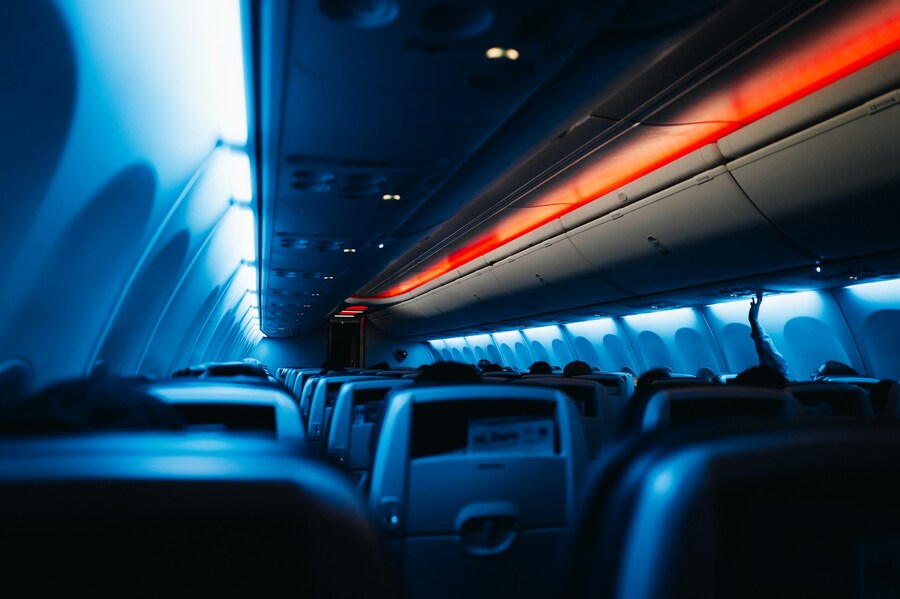
 Source: Thom Holmes/Unsplash
Achieving true comfort in a pressurized metal tube requires a shift in perspective. Instead of viewing your outfit as a single aesthetic choice, you must view it as a modular system. The fluctuations in cabin temperature are rarely predictable. Factors, such as your proximity to the emergency exit (which is notoriously cold), the efficiency of the individual air nozzle (the "gasper"), and the stage of the flight, all play a role. During takeoff and landing, cabin temperatures often spike as the engines work harder and the environmental control systems adjust. Conversely, at cruising altitude, the thin exterior air and recycled ventilation can create a persistent chill.
The science of the base layer: moisture and regulation
The foundation of any successful travel outfit is the base layer. This is the garment in direct contact with your skin, and its primary job is moisture management. Even if you don't feel like you're sweating, your body constantly releases water vapor. In a cramped airplane seat, this vapor can become trapped, leading to a clammy feeling that eventually turns into a deep chill when the air conditioning kicks in.
Avoid cotton at all costs for your base layer. Cotton is hydrophilic; it absorbs moisture and stays wet, which can zap your body heat and lead to discomfort. Instead, look toward natural fibers like merino wool or high-quality synthetic blends. Merino is the gold standard for travelers because it's naturally antimicrobial, meaning it won't hold onto odors even after a fourteen-hour flight. It regulates temperature exceptionally well, keeping you cool when the cabin is stuffy and warm when the frost begins to creep across the windowpane. A lightweight, long-sleeved merino shirt is perhaps the single most important investment a frequent flyer can make.
Building the mid-layer for insulation and adaptability
Once you have secured a breathable base, the mid-layer provides the necessary insulation. This is the component you'll likely be adding and removing most frequently throughout the journey. The goal here is to trap air, which acts as a natural insulator. However, this layer must also be compressible. Space is at a premium in a carry-on bag, and you don't want a bulky sweater that takes up half your luggage once you reach a tropical destination.
Technical fleeces or "nano" puff vests are ideal for this purpose. A vest is particularly effective because it protects your core – the area most vital for maintaining your overall body temperature – while leaving your arms free for movement and preventing you from feeling overly restricted in a narrow middle seat. If you prefer a full jacket, ensure it has a full-length zipper. This allows for mechanical venting; you can unzip halfway if you feel a bit warm without needing to undergo the gymnastics required to remove a garment entirely while buckled in.
The outer shell: your shield against the draft
The final component of the layering system is the outer shell. In the context of air travel, this isn't necessarily a heavy winter coat, but rather a lightweight, wind-resistant layer that protects against the aggressive airflow of the cabin's ventilation system. Many travelers find that even with a sweater, the direct "wind chill" from the overhead vents can be biting. A soft-shell jacket or a structured blazer made from technical fabric can serve as this final barrier.
This layer also serves a dual purpose as your "utility" garment. Look for outer layers with deep, zippered pockets. These are essential for keeping your passport, boarding pass, phone, and headphones secure and easily accessible during security screenings and boarding. By keeping your essentials on your person rather than in a bag shoved under the seat, you reduce the stress of the "thaw" periods when you need to move quickly.
Managing the extremities: socks, scarves, and headwear
It's a well-documented physiological fact that if your feet are cold, your entire body will feel cold. Aircraft floors are notoriously poorly insulated. If you're flying in sandals or thin dress socks, you're inviting the freeze-thaw cycle to win. Always pack a pair of dedicated "cabin socks." These should be thick, plush, and ideally made of a wool blend. Some travelers even prefer compression socks, which assist with circulation on long flights while providing a significant amount of warmth.
Moreover, don't underestimate the power of a large scarf or a pashmina. This is the ultimate "multitool" of travel clothing. It can function as a traditional scarf, a makeshift pillow, a lumbar support roll, or a blanket if the airline-provided one is too thin or suspiciously scratchy. Similarly, a lightweight beanie or a hood can be a lifesaver. Since a significant amount of heat is lost through the head, and the air vents are positioned directly above you, having a way to cover your ears and crown can make the difference between a fitful nap and deep sleep.
The logistics of the transition: pre-flight and post-flight
The "cycle" doesn't just happen in the air; it begins the moment you leave your house. Managing your layers starts with how you pack and how you navigate the airport. One of the biggest mistakes travelers make is wearing their heaviest layers while standing in the security line. This leads to overheating and sweating before you even board, which sets you up for a chill later. Carry your heavy jacket or stow it in an accessible part of your carry-on until you are actually at the gate.
This logistical dance also applies to your arrival. If you're flying from a cold climate to a warm one, your layering system should be designed to "deconstruct" rapidly. Your base layer should be socially acceptable to wear on its own (like a high-quality t-shirt or polo), allowing you to strip down to the essentials the moment you hit the tarmac.
Strategic planning for airport logistics
Comfort is as much about peace of mind as it's about physical warmth. Part of avoiding the "thaw" of travel stress is ensuring that the transition from your vehicle to the terminal is as seamless as possible. This is especially true when managing long-term travel where you might be leaving a vehicle behind for weeks. Efficient planning at the start of your journey prevents the frantic rush that leads to physical exhaustion.
For those flying out of Western New York, securing reliable ROC Airport parking is a vital first step in the layering process of a successful trip. By utilizing various ROC parking deals, travelers can ensure their vehicle is stored safely while they focus on the complexities of their flight. Having your parking sorted in advance means you aren't sweating through your layers while hunting for a spot in a crowded lot, allowing you to arrive at the gate cool, calm, and ready to manage your cabin environment.
The role of hydration and nutrition in temperature regulation
While clothing is your primary defense, your internal "furnace" plays a massive role in how you perceive temperature. Dehydration is rampant in airplane cabins due to the extremely low humidity levels (often less than 20%). When you're dehydrated, your body has a harder time regulating its internal temperature, making you more susceptible to the cold.
Avoid excessive caffeine and alcohol, both of which can lead to dehydration and interfere with your sleep cycles. Instead, aim to drink significantly more water than you would on the ground. In addition, consider the timing of your meals. Digestion creates thermogenesis – the production of heat in the body. If you find yourself consistently cold during flights, eating a protein-rich snack can actually help raise your core temperature slightly. Conversely, if you tend to overheat, sticking to lighter fruits and vegetables can prevent that heavy, sweltering feeling that often follows a dense airline meal.
Utilizing on-board amenities effectively
Modern aircraft are equipped with several tools to help you manage the freeze-thaw cycle, but they are often underutilized. The overhead air vent is your best friend for fine-tuning. Even if the cabin feels cold, keeping the vent open at a very low flow can help keep the air around your face from becoming stagnant, which can help with motion sickness and general alertness. If you're too cold, aim the vent away from your skin rather than closing it entirely, as some airflow is necessary for air quality.
If you find yourself in a "freeze" state that your layers can't handle, don't be afraid to ask the cabin crew for an extra blanket early in the flight. On many long-haul journeys, blankets are rationed, and once they are gone, they are gone. Similarly, if you have a reusable water bottle, ask the flight attendants to fill it with warm water. Holding a warm bottle against your core or tucking it near your feet can provide a DIY heating pad effect that lasts for hours.
The psychological aspect of travel comfort
Finally, it's worth noting that comfort is partially a mental game. When we're stressed, our bodies enter a "fight or flight" mode that can restrict peripheral blood flow, making our hands and feet feel colder. By implementing a consistent layering routine, you're sending a signal to your nervous system that you're prepared and in control. The act of "settling in" – changing into your cabin socks, adjusting your scarf, and organizing your seatback pocket – creates a sense of ritual that can lower cortisol levels.
This psychological preparation extends to how you handle delays or changes in cabin pressure. By wearing modular clothing, you give yourself the agency to react to your environment. You're no longer a victim of the airline's thermostat; you're the captain of your own personal climate. This sense of autonomy is the ultimate "hack" for surviving the rigors of modern air travel.
The bottom line

Source: Valeriia Miller/Unsplash
Surviving the freeze-thaw cycle of modern flights isn't about packing more; it's about packing smarter. By prioritizing high-performance fabrics like merino wool, utilizing a three-tier layering system, and managing your logistics – from your internal hydration to your parking arrangements – you can transform a grueling journey into a manageable transition. The goal of the modern traveler is to arrive at their destination not just on time, but in a physical state that allows them to hit the ground running. When you master the art of the layer, the temperature of the cabin becomes a trivial detail rather than a defining feature of your trip.


