

In the ever-evolving landscape of international travel, the return journey to the United States often brings a mix of relief and dread. After a long-haul flight, the prospect of standing in a serpentine queue at
Global Entry vs. Mobile Passport Control: which one is actually faster?
 Source: Google Search
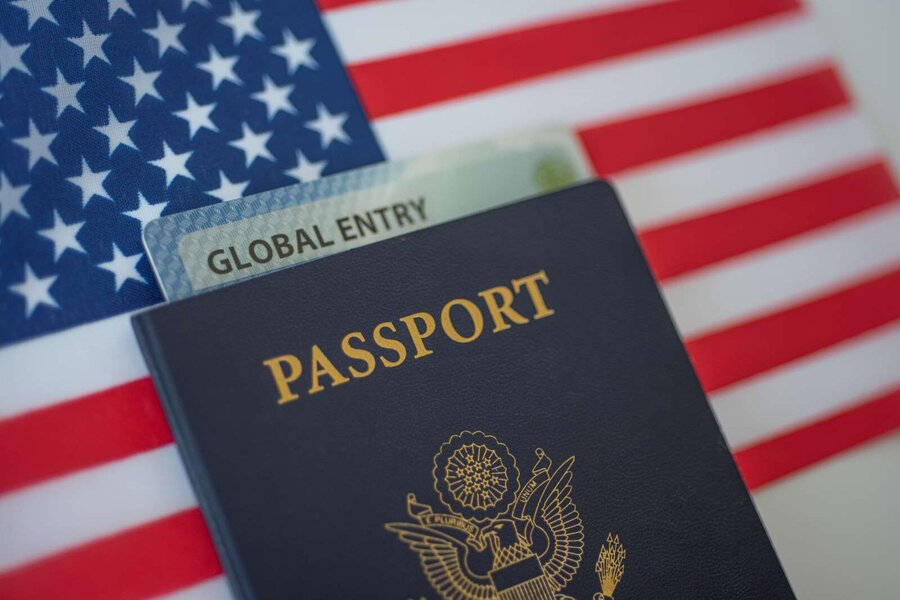
To determine which system reigns supreme, one must first look at the fundamental differences in how they process human beings. Global Entry is a "Trusted Traveler Program." This means the government has already vetted you through a rigorous background check, an in-person interview, and a $120 investment. Because you're pre-cleared, the physical process at the airport is incredibly streamlined. You walk up to a biometric kiosk – many of which now use facial recognition rather than fingerprinting – and in a matter of seconds, your identity is verified. In most cases, you don't even need to scan your physical passport; the camera recognizes your face, matches it to your file, and prints a receipt or displays a green light for you to proceed. It's the closest thing to a "fast pass" for the border.
On the other hand, Mobile Passport Control is an app-based solution that doesn't require pre-approval. It serves as a digital version of the traditional blue-and-white customs declaration form. While Global Entry focuses on who you are, MPC focuses on what you're bringing and where you've been. You submit your passport details and declaration answers via the official CBP app upon landing. Once submitted, you receive a digital QR code. You then enter a dedicated MPC lane, which is separate from the general population but still ends with a brief face-to-face interaction with a CBP officer. While you skip the longest lines, you're still being processed as a standard traveler, albeit a more efficient one.
The velocity of verification: comparing real-world wait times
When we talk about speed, we have to consider the "total time" spent. For a Global Entry member, the average time spent at a kiosk is under 30 seconds. Because the program requires such a high barrier to entry, the number of people in the Global Entry lane is almost always smaller than in any other queue. Even during peak arrival times at massive hubs like JFK or LAX, the Global Entry line rarely exceeds a five-minute wait. The efficiency is unparalleled because the system is designed to remove the officer from the initial verification step entirely.
Mobile Passport Control is undeniably fast, but it's subject to more variability. Because the app is free and requires no background check, its popularity has surged. In 2026, it isn't uncommon to find the MPC lane longer than the Global Entry lane. Moreover, because you must still speak with an officer to have your QR code scanned and your passport verified, the "per-person" processing time is naturally higher than the automated Global Entry kiosks. However, compared to the general "U.S. Citizens" or "Visitors" lines, which can frequently exceed an hour, MPC is still a massive time-saver, often getting travelers through in 10 to 15 minutes.
The application bottleneck: time before the trip
Speed isn't just measured at the airport; it's also measured in the months leading up to your flight. This is where Mobile Passport Control wins by a landslide. You can download the MPC app while sitting on the plane after landing, enter your details, and be ready to go in minutes. There's no waiting for approval, no fees, and no interviews. It's the perfect "last-minute" hack for someone who realized too late that their international arrival might be a nightmare.
Global Entry, conversely, is a long-term play. In the current year, the application backlog remains a significant factor. While many applicants are conditionally approved within days, scheduling the mandatory in-person interview can take months. Some travelers have turned to "Enrollment on Arrival," which allows you to do your interview when you return from an international trip, but this requires you to have already been conditionally approved. If you have a trip next week and you aren't already in the system, Global Entry cannot help you. It's a tool for the proactive, frequent flyer who views the $120 fee as a small price to pay for five years of convenience.
The family factor: group travel dynamics
For those traveling with a spouse and children, the math changes significantly. Global Entry requires every single person in the group – including infants – to have their own individual membership. If a mother has Global Entry but her two children don't, she cannot bring them through the Global Entry lane. This often leaves families split up or forces the member to wait in the slow line with everyone else. While the government has made strides by making Global Entry free for minors whose parents are members, the logistical hurdle of getting the whole family to an enrollment center for interviews remains a deterrent.
Mobile Passport Control handles families with far more grace. A single user can create a profile for up to 12 people on one device. This means one parent can submit the declarations for the entire household and the whole group can walk through the MPC lane together. For families, this often makes MPC the "faster" choice in terms of collective group movement, even if the individual processing is slightly slower than a kiosk. It keeps the unit together and minimizes the technical friction of managing multiple accounts and devices.
Source: Google Search
TSA PreCheck: the hidden speed multiplier
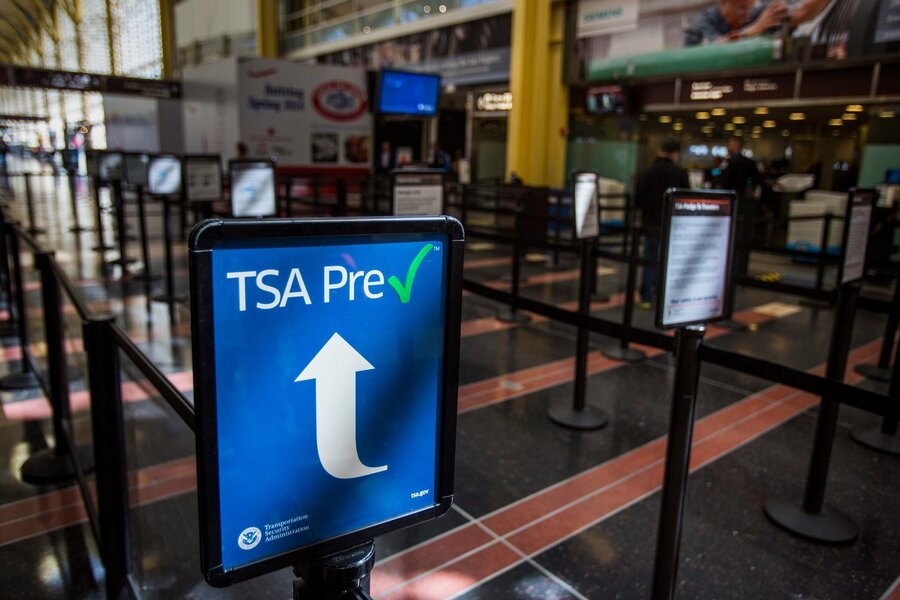
One of the most significant advantages of Global Entry that's often overlooked in the "speed" debate is the inclusion of TSA PreCheck. When you're approved for Global Entry, you receive a Known Traveler Number (KTN) that grants you access to expedited security screening at over 200 U.S. airports for all your domestic and international departures. This means you don't have to remove your shoes, light jackets, or belts, and your laptop and liquids stay inside your bag.
Mobile Passport Control offers zero benefits for the departure side of your journey. It's strictly an "arrival" tool. If you travel more than two or three times a year, the time saved by TSA PreCheck on every single departure likely outweighs the slightly longer wait in the MPC lane upon arrival. Global Entry provides a "holistic" speed increase to the entire travel experience, from the moment you enter the departure airport to the moment you leave the arrival terminal. MPC is a surgical tool designed for a single purpose: getting past the border guards.
Technical reliability and regional availability
As we move through 2026, the technology behind these systems has become more robust, but it isn't infallible. Global Entry kiosks are physical hardware; they can break down or experience software glitches. However, CBP has moved toward "headless" kiosks that are simpler and more reliable. Mobile Passport Control relies on your smartphone, your cellular data or the airport Wi-Fi, and the CBP's backend servers. If your phone dies during a 12-hour flight or the airport's Wi-Fi is spotty, you might find yourself unable to use the app, forcing you back into the general line.
Availability is also a key differentiator. Global Entry is available at nearly every major international airport in the United States and several "Preclearance" locations abroad, such as Dublin, Aruba, and several Canadian cities. Mobile Passport Control is widely available but not quite as universal. Before you rely on MPC, you must verify that your specific arrival airport supports it. Most major hubs do, but if you're flying into a smaller international gateway, you might find that the MPC lane simply doesn't exist, whereas Global Entry kiosks are almost always present.
Strategic travel planning and local logistics
Part of the "speed" of travel isn't just how fast you get through the terminal, but how quickly you can get home or to your hotel once you walk out those sliding doors. Frequent travelers know that the journey doesn't end at the customs desk. For those flying out of regional hubs, the efficiency of your ground transportation and parking can be just as impactful as your choice of customs program. For instance, if you're returning to South Florida, you want to ensure your vehicle is easily accessible so you can beat the highway traffic. Planning ahead for PBI Airport parking can save you just as much time as a Global Entry kiosk. By securing PBI parking deals in advance, you avoid the frustration of circling full garages or waiting for slow shuttles, allowing the speed you gained at customs to carry through to the very end of your trip.
The bottom line
.jpg)
In the final assessment, the "faster" program depends entirely on who you're as a traveler. If you're a solo business traveler or a couple who flies internationally at least twice a year, Global Entry is the definitive winner. The combination of the 30-second kiosk experience and the added benefit of TSA PreCheck creates a seamless "fast track" that justifies the $120 fee and the initial application hassle. It's a premium service for those who value consistency and the absolute minimum of human interaction at the border.
However, for the occasional traveler, the "once-a-year" vacationer, or the head of a large family, Mobile Passport Control is the smarter, more efficient choice. It provides 80% of the benefit of Global Entry with 0% of the cost or administrative burden. In 2026, the MPC app has become so streamlined that the time difference between it and Global Entry is often negligible, especially when you factor in the time saved by not having to visit an enrollment center for an interview. Ultimately, the best strategy for any savvy traveler is to have the MPC app downloaded as a backup, even if you have Global Entry. Technology can fail, and lines can shift, but having both tools in your digital arsenal ensures that you'll never be the person stuck at the back of a two-hour queue. Wherever your next adventure takes you, may your flights be smooth, your connections easy, and your journey home be as fast as the technology allows!


