

Modern travel presents a profound paradox: the ease of global exploration versus the heavy carbon footprint of every flight. To bridge this gap, the aviation industry heavily promotes carbon offsetting – a simple click to "neutralize" emissions through tree planting or renewable energy. However, as environmental scrutiny increases, the gap between marketing narratives and atmospheric reality has widened. Not all green programs are equal; while some airlines invest in legitimate carbon removal, others rely on low-quality credits that offer little environmental benefit beyond a clear conscience. Navigating this landscape of potential greenwashing requires a deep understanding of how credits are verified and whether they truly impact global warming. It's time to uncover the truth behind these environmental promises. So, let's explore reality!
Is your flight truly "carbon neutral," or are airline offsetting programs just a marketing illusion?
While the math of offsetting seems simple, the execution is often flawed. Many programs rely on "avoided deforestation," which frequently fails due to "leakage" or non-existent threats to the land. Moreover, biological sequestration lacks permanence; a tree takes decades to absorb what a jet burns instantly, and wildfires can quickly reverse any progress. Consequently, many climate experts argue that these credits are often just "phantom reductions" rather than genuine neutralization.

Source: Grant Durr/Unsplash
The mechanics of modern sequestration: why trees aren't always the answer
In the current travel era, the most reputable airline programs have begun to pivot away from simple reforestation and toward more durable forms of carbon removal. While planting trees remains the most popular image for "going green," it's arguably the most fragile. High-quality sequestration now focuses on technological solutions or "blue carbon" projects. Blue carbon refers to the carbon captured by the world's ocean and coastal ecosystems, such as mangroves, seagrasses, and salt marshes. These ecosystems can store up to ten times more carbon per acre than terrestrial forests and are generally less susceptible to the immediate threat of fire. Airlines that partner with projects focused on mangrove restoration in Pakistan or peatland conservation in Indonesia are generally viewed as having more robust environmental strategies than those simply funding massive monoculture tree plantations.
Beyond biology, we're seeing the rise of
Identifying the "scams": red flags in voluntary carbon markets
The term "scam" in the carbon world rarely refers to a literal disappearance of funds; rather, it refers to the sale of credits that have zero net benefit for the climate. The primary red flag is a lack of "additionality." For a carbon credit to be valid, the project it supports must only be possible because of the money generated from the sale of that credit. If an airline is claiming offsets from a wind farm that was already profitable and would have been built anyway due to government subsidies or high energy demand, there's no "additional" carbon being saved. You're simply subsidizing a project that doesn't need your help, while your flight's emissions continue to heat the planet.
Another major concern is "double counting." This occurs when a project developer sells the same ton of carbon reduction to an airline and then the host country also claims that same reduction toward its own national climate goals. This creative accounting makes it look like the world is making progress when, in reality, only one ton of carbon was actually removed. To avoid this, travelers should look for airlines that utilize "corresponding adjustments," which ensure that the credit is retired from the global ledger and cannot be claimed by any other entity. Transparency is the antidote to these pitfalls, but unfortunately, the fine print of many airline sustainability pages is intentionally opaque, designed to soothe the conscience rather than inform the consumer.

Source: Annie Spratt/Unsplash
The problem of verification and regulatory oversight
To combat the "Wild West" nature of carbon markets, several independent organizations have emerged to audit and certify projects. Names like Verra (Verified Carbon Standard) and the Gold Standard are the industry benchmarks. If an airline doesn't explicitly state which third-party standard is verifying their credits, it's a significant warning sign. However, even these gatekeepers have faced criticism for being too lenient in the past. This has led to the rise of fourth-party evaluators like 4AIR or Sylvera, which provide deeper, data-driven ratings on the actual efficacy of individual projects. They look at satellite imagery to see if trees are actually being planted and analyze the financial records of projects to ensure additionality. A truly committed airline will often go beyond the basic certifications to provide this level of granular proof to its passengers.
Avoided deforestation vs. direct carbon removal
When evaluating a program, it's helpful to distinguish between "avoidance" and "removal." Avoidance credits (like preventing a forest from being cut) are inherently speculative. You're betting on a negative – that something bad would have happened if you hadn't stepped in. Removal credits, on the other hand, are based on taking carbon that's already in the atmosphere and putting it somewhere else. As we move forward, the consensus is shifting toward the idea that we can no longer "avoid" our way to safety. We must actively remove carbon. Airlines that offer a portfolio heavy on removal technologies – even if it makes the offset more expensive for the passenger – are the ones truly leading the industry toward a sustainable future.
Source: Jose Lebron/Unsplash
Beyond offsetting: high-impact travel hacks for the conscious flyer
While choosing the right offset is important, it's essentially a reactive measure. The most effective "hack" for the sustainable traveler is to minimize the initial emission as much as possible. This starts with flight selection. Newer aircraft models, such as the Airbus A350 or the Boeing 787 Dreamliner, are significantly more fuel-efficient than their predecessors, often consuming 20-25% less fuel. Choosing a direct flight over a layover is another high-impact decision; a significant portion of a flight's fuel is burned during takeoff and climb, so minimizing the number of times the plane leaves the ground is a direct win for the environment. Even seating choice matters: a first-class seat takes up roughly three to four times more physical space than an economy seat, meaning your personal share of the flight's total carbon footprint is exponentially higher.
Moreover, packing light isn't just a convenience for navigating terminals; it's a weight-reduction strategy for the aircraft. Every kilogram of luggage requires fuel to lift and transport. If every passenger on a wide-body jet reduced their luggage weight by just five pounds, the fuel savings over the course of a year would be staggering. These small, cumulative choices represent a more holistic approach to travel than simply checking a box at the end of a transaction. By combining behavioral changes with high-quality offsets, a traveler can move from "less bad" to "genuinely responsible."
The future of fuel: transitioning from credits to Sustainable Aviation Fuel (SAF)
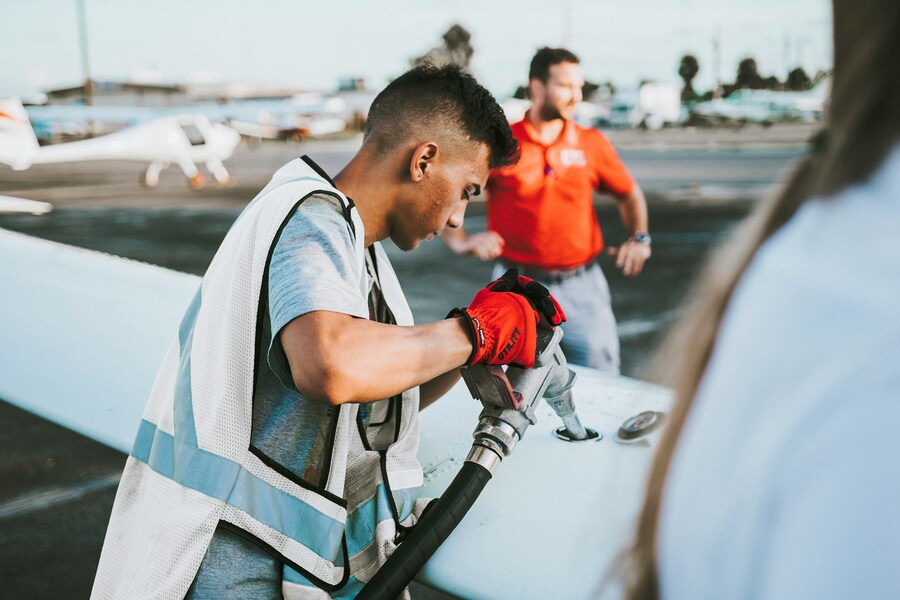
The most exciting development in aviation sustainability isn't about planting trees at all – it's about changing what goes into the fuel tanks. Sustainable Aviation Fuel (SAF) is a "drop-in" fuel made from renewable sources like used cooking oil, agricultural waste, or even captured atmospheric CO2. Unlike offsets, which try to fix the damage after it's done, SAF reduces the lifecycle emissions of a flight by up to 80% from the start. Many leading airlines now allow passengers to specifically purchase SAF instead of traditional carbon credits. This is a much more direct way to support the industry's decarbonization because it creates a market signal that incentivizes the production of cleaner fuels.
The challenge with SAF is currently one of scale and price. It's currently produced in very small quantities compared to traditional jet kerosene, and it's significantly more expensive. However, as more travelers choose to "buy SAF" during their booking process, the investment in production facilities increases, leading to economies of scale that will eventually drive the price down. If you have the choice between an offset and an SAF contribution, the SAF contribution is almost always the more impactful environmental choice. It's a tangible investment in the future of flight technology rather than a hope that a distant forest remains standing.
In the spirit of minimizing the total footprint of a journey, it's also essential to consider the logistical impacts of ground travel and airport operations. Choosing smaller, more efficient regional hubs can often lead to less idling on the tarmac and shorter travel times to the gate. For travelers in the Southern California area, looking into BUR Airport parking options can be a smart way to streamline the start of a trip. Utilizing specialized platforms to find competitive BUR parking deals not only saves money but often allows for more efficient transit to a smaller, less congested airport like Hollywood Burbank (BUR). By opting for these smaller hubs, travelers avoid the massive congestion and extended ground emissions typical of larger international gateways, effectively chipping away at the secondary carbon costs of their itinerary before they even board the aircraft.

Source: Trung Cao/Unsplash
Conclusion
The reality of airline carbon offsetting is a complex mix of genuine innovation and deceptive marketing, requiring travelers to shift from passive consumers to active auditors. Rather than settling for a "carbon neutral" badge, prioritize airlines that provide transparent verification, favor permanent carbon removal over simple avoidance, and offer support for Sustainable Aviation Fuel (SAF). Offsetting remains a transitional tool – a way to mitigate impact while aviation technology catches up – but its true efficacy depends on combining these credits with smart behavioral hacks like flying direct and packing light. Ultimately, a greener future for travel won't be won by a single checkbox, but by a collective demand for absolute transparency and measurable, high-quality impact. May your future journeys be as enriching for you as they are kind to the planet!


