

For decades, air travel was defined by an uneasy reliance on airline baggage systems, where passengers surrendered their belongings to a labyrinth of fragile barcodes and manual scans. This "black hole" of visibility often resulted in systemic anxiety and lost items. However, a radical transformation has shifted the power dynamic from centralized carrier authority directly into the palms of travelers. The "AirTag 2.0" philosophy represents a new era of digital transparency, where sophisticated mesh networks and real-time data provide passengers with more insight than the ground crews themselves. This travel guide explores how to harness these innovations to ensure your luggage is never truly lost again, reclaiming your control in the skies. It's time to modernize your journey. So, let's dive in!
Why is luggage tracking still the biggest hurdle in modern air travel?
 Source: Eminent Luggage/Unsplash
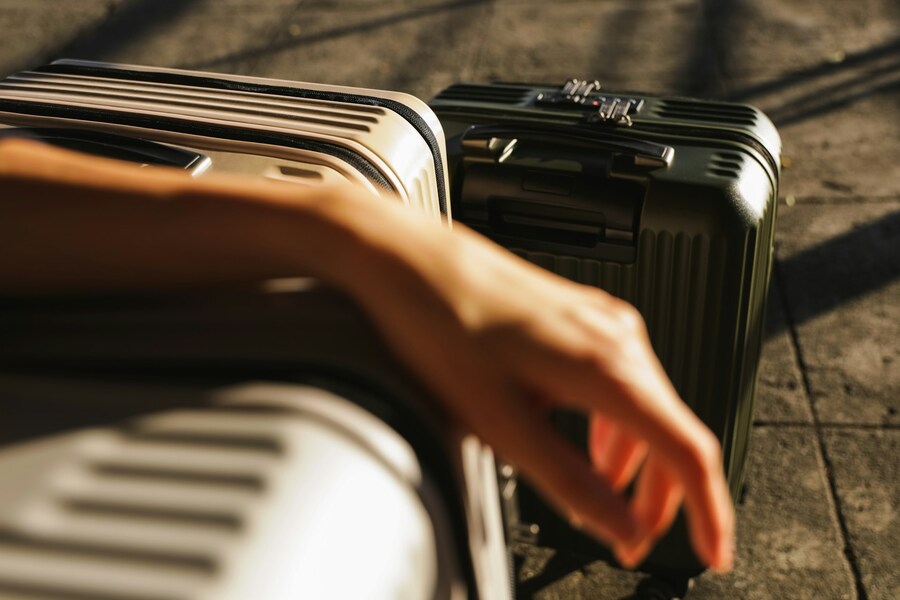
Airlines still rely on "point-to-point" scanning, creating vast digital "dark zones" where bags effectively vanish if mishandled between checkpoints. Personal trackers solve this by providing a continuous, independent data stream. While carriers initially resisted this tech, they now embrace it as a recovery asset. Today, knowing your bag's exact location is no longer a privilege – it's a standard expectation for the modern, empowered traveler.
The rise of shared location ecosystems
The most significant leap forward in luggage security is the move toward "Share Item Location" technology. In the past, if you saw your bag sitting in a terminal in London while you were standing in a terminal in Rome, your only recourse was to show your phone to a frustrated customer service agent. This often led to a "he-said, she-said" scenario where the agent would insist the bag was "in the system," even as you looked at a blue dot moving in the wrong direction on your screen.
The current standard has fixed this through secure, temporary link sharing. By generating a cryptographic URL through your tracking app, you can now provide the airline with a live, interactive map of your bag's location. This link isn't just a screenshot; it's a dynamic portal that updates in real-time. Major international carriers have integrated this feature directly into their baggage claim portals. When you file a
Optimizing signal strength in the cargo hold
One of the common misconceptions about personal trackers is that they work like a GPS device on a car. In reality, most consumer trackers rely on a "mesh network" of nearby smartphones. For an AirTag to update its location, it needs to be within Bluetooth range of a compatible device. This leads many travelers to worry that their bag will go "dark" once it's tucked away in the belly of a massive aircraft. While it's true that a bag in the middle of a shielded aluminum cargo hold might not update mid-flight, the "mesh" density at modern airports is so high that your bag will almost certainly ping a signal the moment the cargo door opens or as it passes near a ground handler's phone.
To maximize this, strategic placement within the bag is essential. Tucking a tracker deep inside a lead-lined toiletry bag or surrounded by dense electronics will severely dampen the signal. The best practice is to secure the tracker in a dedicated pocket near the outer shell of the suitcase, ideally made of fabric rather than hard-shell polycarbonate. Some travelers have even begun using "double-tagging" strategies – placing one tracker inside the bag and another hidden within a robust, reinforced luggage tag on the exterior. This ensures that even if the bag is opened or the outer tag is ripped off, the digital breadcrumbs remain intact.
Using data as legal leverage
Knowledge is power, but in the world of aviation, data is currency. Under international agreements like the Montreal Convention, airlines are legally liable for the delay or loss of your luggage. However, claiming this compensation has historically been a bureaucratic nightmare. Airlines often use the "waiting period" to their advantage, hoping that the bag will eventually turn up and the passenger will drop the claim.
Having a precise log of your bag's movement changes the game entirely. If you can prove that your bag was left at the departure airport despite the airline claiming it was "loaded," you have immediate grounds for a more aggressive claim. This data is also invaluable for travel insurance providers. Many premium insurance policies now accept tracking logs as valid evidence for "baggage delay" payouts, allowing you to receive funds for essential purchases (like clothes and toiletries) within hours rather than weeks. Instead of begging the airline for an update, you're presenting them with an undeniable digital trail that forces their hand.
The synergy of physical and digital safeguards
While we're living in a digital-first era, the most successful travelers understand that technology should complement, not replace, physical safeguards. A tracker can tell you where your bag is, but it can't tell a ground handler who the bag belongs to if the airline's paper tag has been torn off. The ultimate "AirTag 2.0" setup involves a hybrid approach. Every piece of checked luggage should have a permanent ID tag with your name and a "burner" phone number (to protect your privacy) or a QR code that links to a secure contact form.
In addition, removing old "sticky" barcodes from previous flights is a small but vital hack. Automated sorting machines in modern "Baggage Factories" can easily be confused by a 2-year-old sticker from a trip to Tokyo when you're currently trying to get to New York. By cleaning the exterior of your bag and ensuring your tracker is active before you even leave your house, you reduce the mechanical friction that leads to lost luggage in the first place. This proactive maintenance ensures that the technology has the best possible environment to do its job.
Navigating international logistics and regulations
When traveling across borders, the tracking game becomes slightly more complex. Different countries have varying levels of mesh network density. In North America and Europe, the density of Apple and Google devices is so high that a tracker will update almost continuously. However, in parts of Central Asia or rural Africa, a Bluetooth-based tracker might go hours without an update. In these scenarios, travelers are increasingly turning to "hybrid" devices that combine Bluetooth mesh tracking with low-power cellular GPS. These devices are slightly larger and require a subscription, but they offer the "nuclear option" for those carrying high-value equipment like cameras or specialized sports gear.
It's also important to stay aware of the changing landscape of airport security. While trackers are permitted, some international security agents who are less familiar with the latest tech might occasionally flag a suspicious-looking "puck" inside a suitcase during an X-ray scan. A simple solution is to keep the tracker in a clear, labeled pouch or to use one of the many luggage brands that have now built-in, TSA-approved "tracker sleeves." Transparency with security personnel is always the fastest way through a checkpoint, and having your device readily identifiable prevents unnecessary bag searches that can lead to missed connections.
Planning the start of the journey
The success of a trip often depends on the very first few hours of the itinerary. If you're stressed before you even get to the terminal, you're more likely to make mistakes with your packing or documentation. Efficiency is a chain, and every link must be strong from the moment you leave your front door. When planning a departure from major hubs, the logistics begin before you even reach the terminal. This involves everything from checking the weather at your connection points to ensuring your ground transportation is synchronized with your flight's actual departure time.
For those flying out of the West Coast, securing reliable LAX Airport parking via platforms like AirportParking.deals is a critical first step in a stress-free itinerary. By utilizing LAX parking deals, travelers can bypass the last-minute scramble of overcrowded lots, ensuring that the only thing they have to track once they arrive is their suitcase, not their vehicle's security. Starting your journey with a pre-booked, secure parking spot provides the mental bandwidth needed to double-check your tracking apps and ensure all your digital beacons are synchronized and ready for the long-haul flight ahead. Reducing the chaos factors at the start of your trip allows you to focus on the high-tech aspects of your luggage security, ensuring that you're calm and collected when you finally hand your bags over to the airline.
The psychology of transparent travel
Perhaps the greatest benefit of the AirTag revolution is not technical, but psychological. The "black hole" of baggage claim used to be one of the most stressful parts of flying. That frantic period of standing by the carousel, watching hundreds of identical black suitcases slide past while yours remains missing, is a uniquely modern form of torture. With a tracker, that stress is almost entirely eliminated. You can sit in the airport lounge or grab a coffee upon arrival, check your phone, and see that your bag is currently 50 yards away, being unloaded from the plane. You don't need to hover over the belt; you simply walk over when the app tells you your bag is nearby.
This sense of control changes the way we interact with airline staff as well. Instead of approaching a service desk with desperation and anger, we can approach with information and calm. This shift in tone often leads to much better service. Airline employees are human, and they are far more likely to go the extra mile for a passenger who says, "My bag is in Cargo Shed 4; here's the link to the location," than for someone who's simply shouting about their missing vacation. In this way, technology has not only improved the logistics of travel but also restored a level of dignity to the passenger experience.
The bottom line

Source: Oskar Kadaksoo/Unsplash
The era of relying on luck for luggage arrival is over, replaced by an age of digital transparency and passenger empowerment. By leveraging "AirTag 2.0" strategies – combining live location sharing with strategic hardware placement – travelers can now navigate global aviation with unprecedented confidence. While airlines once preferred operational opacity, the cat is out of the bag, and the sky is friendlier for the informed. The future of travel belongs to those who view technology as a partner in their quest for peace of mind. As infrastructure evolves with AI and robotics, our personal tools will only become more integrated and effective. Reclaim your journey by becoming an equipped, empowered voyager. Wishing you smooth skies and perfectly tracked adventures!


