

The modern aviation landscape has shifted from a system of predictable schedules to a complex dance of algorithmic forecasting and real-time data management. For the average traveler, the sight of a "Delayed" status on a departure board is a nuisance; for the savvy flyer, it's a signal to begin a strategic maneuver known as predictive cancellation. We've moved beyond the era where one simply waits for an automated text message or a gate agent's announcement to react to a disrupted itinerary. Today, the most successful travelers are those who can interpret the precursors of a grounded flight and secure their spot on the next available aircraft before the rest of the terminal even realizes there's a problem. This proactive approach requires a blend of technological literacy, a deep understanding of airline operations, and the decisiveness to act on probability rather than certainty.
Mastering the art of air travel in the current decade isn't merely about finding the lowest fare but about protecting the value of your time. When thousands of passengers are displaced simultaneously due to a hub closure or a localized technical glitch, the secondary market for remaining seats evaporates in minutes. By the time a flight is officially canceled, the "rebooking queue" is already thousands of people deep, both physically at the airport and digitally within the airline's app. Predictive cancellation is the ultimate travel hack because it bypasses this bottleneck entirely. It allows you to move while others are still standing still, ensuring that a minor operational hiccup doesn't transform into a multi-day ordeal stranded in a transit city.
So, how can you master the art of predictive rebooking to stay ahead of flight disruptions?
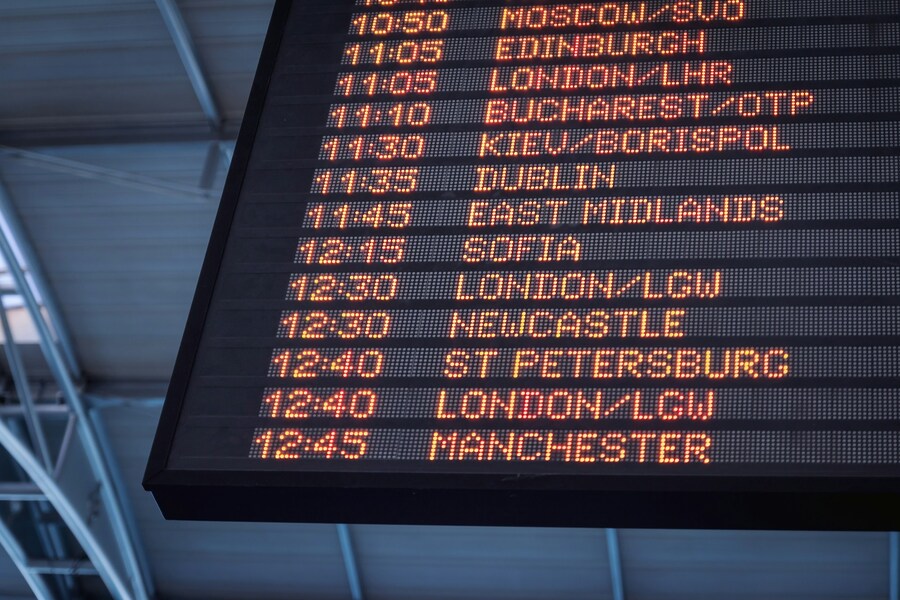 Source: JESHOOTS.COM/Unsplash
The core of predictive rebooking lies in identifying the "ripple effect" before it reaches your specific gate. Airlines operate on a tight rotation where a single aircraft might perform five or six legs in a day. If that aircraft is stuck in a weather system three cities away, your later flight is mathematically compromised, even if the sun is shining at your current location. To master this, you must look at the "incoming flight" data. Most airline apps now provide a feature to track the specific tail number of the plane assigned to your route. If the inbound aircraft hasn't yet departed its previous station and the turnaround time is now shorter than the remaining flight duration, a delay is inevitable. If that delay pushes your arrival past a critical connection window or exceeds a specific threshold – usually two to three hours – the likelihood of an eventual cancellation or a "missed connection" becomes a statistical near-certainty.
The power of inbound flight monitoring
To truly get ahead of the crowd, you need to monitor the health of the entire hub system. Large-scale disruptions often begin with a Ground Stop or a Formal Delay Program issued by air traffic control. These aren't always immediately communicated to passengers because airlines hope for a window of improvement. However, by checking public aviation weather reports and Federal Aviation Administration (FAA) (or regional equivalent) status boards, you can see if your departure or arrival airport is currently under a "metering" program. If the arrival rate is cut by 50%, and you are on a low-priority regional jet rather than a high-capacity international widebody, your flight is a prime candidate for the chopping block. Airlines prioritize flights based on passenger volume and high-value cargo; knowing where you sit in that hierarchy helps you predict your vulnerability.
Once you spot these red flags, the strategy involves "soft-holding" alternatives. While you cannot always hold two active tickets on the same airline without the system flagging a duplicate, you can identify the specific flight numbers and seats available on competitors or later flights within your carrier's network. Many airlines now offer "Flexible Rebooking" windows the moment a weather advisory is issued, even before the flight status changes. Taking advantage of these waivers early is the difference between a confirmed seat in a quiet cabin and a middle seat at the back of a plane three days later.
Leveraging digital tools and social engineering
The digital interface of an airline is your primary battlefield. In the moments leading up to a mass cancellation, the mobile app often updates faster than the gate monitors. However, there is a "ghost period" where the app knows a flight is canceled, but hasn't yet pushed the notification. During this window, the "Change Flight" button often becomes free of charge. If you see your inbound flight is diverted or significantly late, check the change flight section immediately. If the system allows a $0 change, it's an unspoken admission that the flight is in trouble. Taking that move instantly secures your spot on an alternative without needing to speak to a human.
If the app fails or the system locks your ticket, social engineering and multi-channel communication are your next steps. While hundreds of people line up at the customer service desk, you should be on the phone with the international help desk of the airline. For example, if you are flying a major U.S. carrier, calling their Canadian or U.K. support line often connects you to an agent much faster than the domestic line. These agents have the same power to rebook you under "Involuntary Reroute" rules. Moreover, reaching out via social media platforms or dedicated concierge services can sometimes yield results from specialized teams who are empowered to bypass standard booking restrictions during "irregular operations" (IROPS).

Source: Aleksei Zaitcev/Unsplash
Understanding the legal and contractual framework
Knowledge of your rights is the shield that protects your rebooking strategy. In many jurisdictions, once a delay exceeds a certain timeframe, the airline is legally obligated to offer a refund or a reroute. However, many travelers don't realize that they can often request to be rebooked on a competing airline if their original carrier cannot get them to their destination within a reasonable window. This is known as "Rule 240" in historical terms, but in modern contracts of carriage, it's often tucked away under "Force Majeure" or "Failure to Operate" clauses. When you approach an agent with a specific alternative flight already researched – flight number, departure time, and available seat count – you make it incredibly easy for them to say "yes" to your request, as it clears a person from their congested system.
Strategic packing and airport navigation
The physical reality of predictive cancellation also demands a specific approach to luggage. You cannot pivot to a different airline or a flight leaving from a different terminal in 20 minutes if your bags are buried in the belly of the original aircraft. Successful predictive rebookers almost exclusively travel with carry-on luggage. This "one-bag" philosophy grants you the ultimate mobility. If your flight looks like it's going to fail, you can walk out of the terminal, hop on a train to a nearby secondary airport, or switch to a different carrier without the logistical nightmare of "lost" checked bags that are stuck on a canceled plane.
Moreover, having a pre-planned "escape route" from the airport is vital. If you are at a major hub, know which hotels are connected to the terminal and which have the fastest shuttle services. If it becomes clear that no flights will leave that night, the race to book a hotel room is just as competitive as the race for the last seat on a plane. Having an app for a major hotel chain with your credit card details pre-loaded allows you to book a room the moment you decide to abandon the airport, often while you are still standing in the rebooking line just in case.
The logistics of ground integration
A truly comprehensive air travel strategy doesn't end at the boarding gate; it encompasses the entire journey from your front door to the final destination. One of the most overlooked aspects of travel hacking is the management of the vehicle you leave behind. When your flight plans shift – perhaps you end up returning to a different airport or your trip is extended by several days due to the very cancellations you were trying to avoid – having a reliable and flexible parking situation is paramount. Many travelers find that centralized hubs offer the best infrastructure for these scenarios. For those flying out of the Rocky Mountain region, managing your vehicle's stay is a critical part of the puzzle.
Finding reliable DEN parking deals can significantly lower the stress of a disrupted trip, especially when you need a facility that offers easy digital management and quick shuttle access. Utilizing a service like DEN Airport parking through dedicated platforms like AirportParking.deals ensures that even if you have to pivot your flight at the last minute, your car is secured in a location that won't break the bank. These off-site options often provide more flexibility than official on-site lots, which can become prohibitively expensive if a one-day delay turns into a three-day ordeal. Integrating your ground transportation strategy with your aerial one creates a seamless "safety net" for your entire itinerary.
The bottom line

Source: Brett Jordan/Unsplash
The evolution of air travel has turned the passenger into a data analyst. We can no longer afford to be passive recipients of information provided by the airlines, as their primary goal is often damage control and cost mitigation rather than your personal convenience. By adopting a mindset of predictive cancellation, you reclaim control over your schedule. This doesn't mean living in a state of constant anxiety, but rather staying informed and being ready to pull the trigger on a "Plan B" before it becomes everyone else's "Plan A."
The tools available to us today – from real-time flight tracking apps to global weather monitors and flexible parking solutions – have democratized the kind of information that was once the exclusive domain of flight dispatchers. Using this data to anticipate disruptions allows you to navigate the complexities of modern aviation with grace and efficiency. Remember that in the world of travel, the most valuable currency isn't miles or points, but the ability to adapt. Whether it's securing a seat on the last flight out before a storm or ensuring your car is waiting for you at a reasonable price, being proactive is the only way to ensure that the journey remains as rewarding as the destination itself. Safe travels, and may your skies always stay clear and your connections stay seamless!


